Slow Cooker Corned Beef: 3 Simple Steps for Perfect Results
If your last attempt at Slow Cooker Corned Beef: 3 Simple Steps for Perfect Results came out dry, soggy or bland, the fix is almost always in the step most recipes skip. It’s step three here.
Use the visual cue, not only the clock: every oven and every pan runs a little differently. Storage and reheating notes are at the end.
-
Slow Cooker Pork Chops: 3 Methods for Juicy Results
Master the art of tender slow cooker pork chops that stay under 5g of carbs per serving. I… -
Slow Cooker French Dip: 5-Ingredient Low-Carb Success
This slow cooker french dip recipe delivers tender, juicy beef with less than 5g of net ca… -
Slow Cooker Mongolian Beef: 5 Steps to Keto Success
This slow cooker Mongolian beef recipe delivers tender steak in a sugar-free sauce. You wi… -
Slow Cooker Meatballs: 3-Step Low-Carb Method for Better Flavor
Stop settling for dry, bland meatballs. This method guarantees juicy, tender results every…
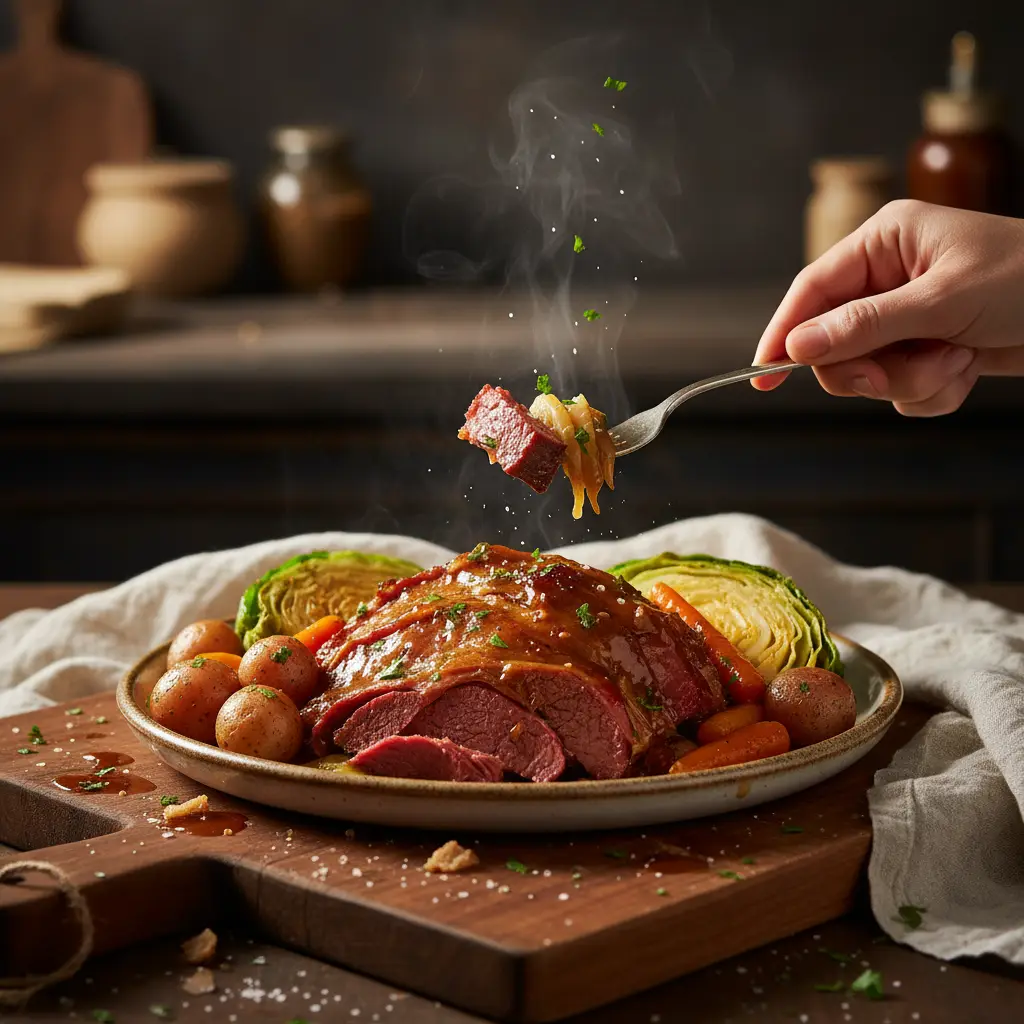
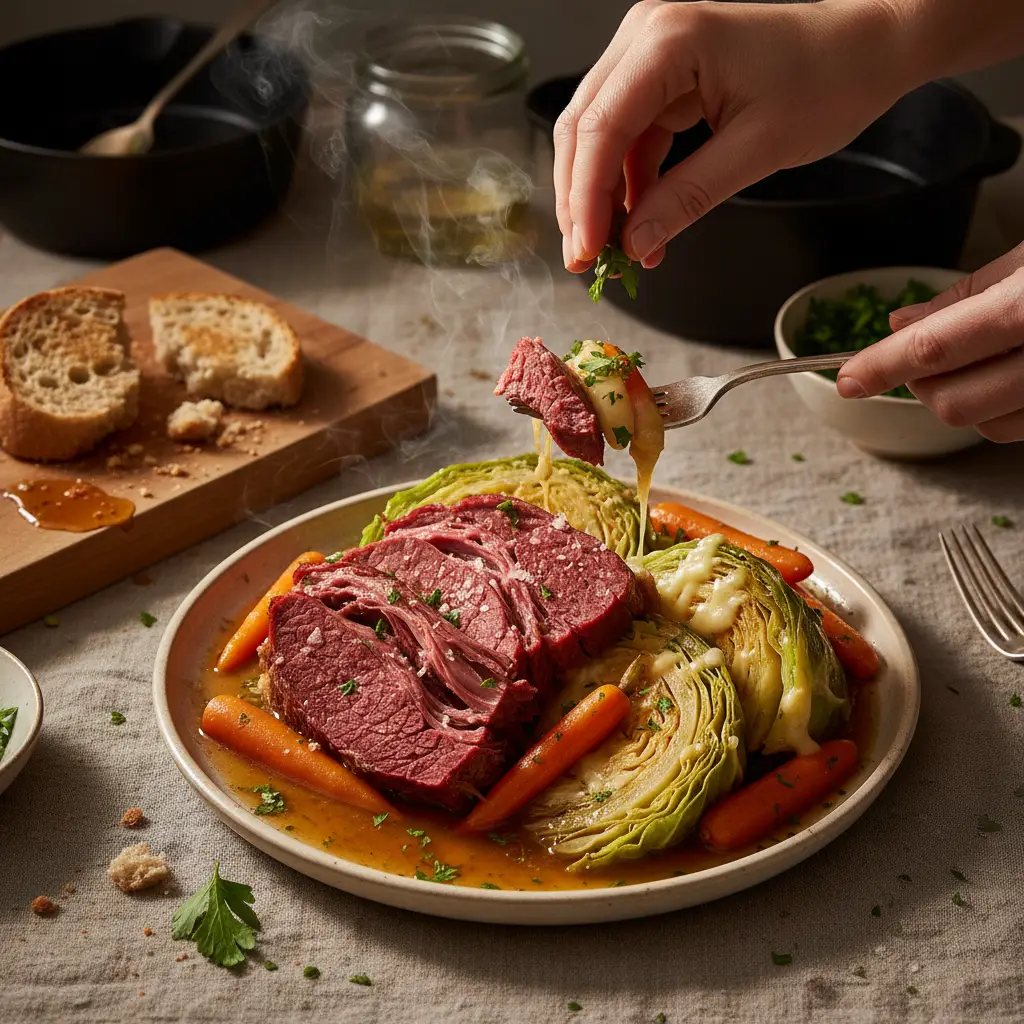
Master the art of tender slow cooker corned beef with this foolproof method. You will save 4 hours of active kitchen time compared to stovetop boiling while ensuring a melt-in-your-mouth texture every single time.
The Low-Carb Soak: in practice
Selecting Your Brisket
Choosing the right cut is 90% of the battle. Look for a flat-cut brisket if you want uniform slices for sandwiches.
Point-cut briskets have more fat marbling, which makes them more forgiving if you accidentally overcook the meat.
- Look for a deep red color
- Aim for 3 to 4 lbs for a family of 4
- Check the spice packet for freshness
Low-Carb Substitutions
Traditional recipes rely on potatoes and carrots, which spike your glucose. Swap these out to keep your meal keto-friendly.
Radishes are the secret weapon here. When slow-cooked, they lose their spicy bite and mimic the texture of boiled potatoes perfectly.
- Use radishes instead of potatoes
- Add celery stalks for crunch
- Use beef bone broth for extra nutrients
Mastering the Cabbage
Cabbage is a delicate vegetable that turns to mush if added too early. Only add it during the final 2 hours of cooking.
If you prefer a bit of texture, quarter the cabbage heads instead of shredding them. This keeps the leaves intact and easy to serve.
- Quarter into 2-inch chunks
- Place on top of the meat
- Season with a pinch of salt
Pros and honest limits
- Set-and-forget convenience
- Low-carb friendly ingredients
- Perfect for meal prep
- Long cook time required
- High sodium content
- Requires proper trimming
Finishing for Texture
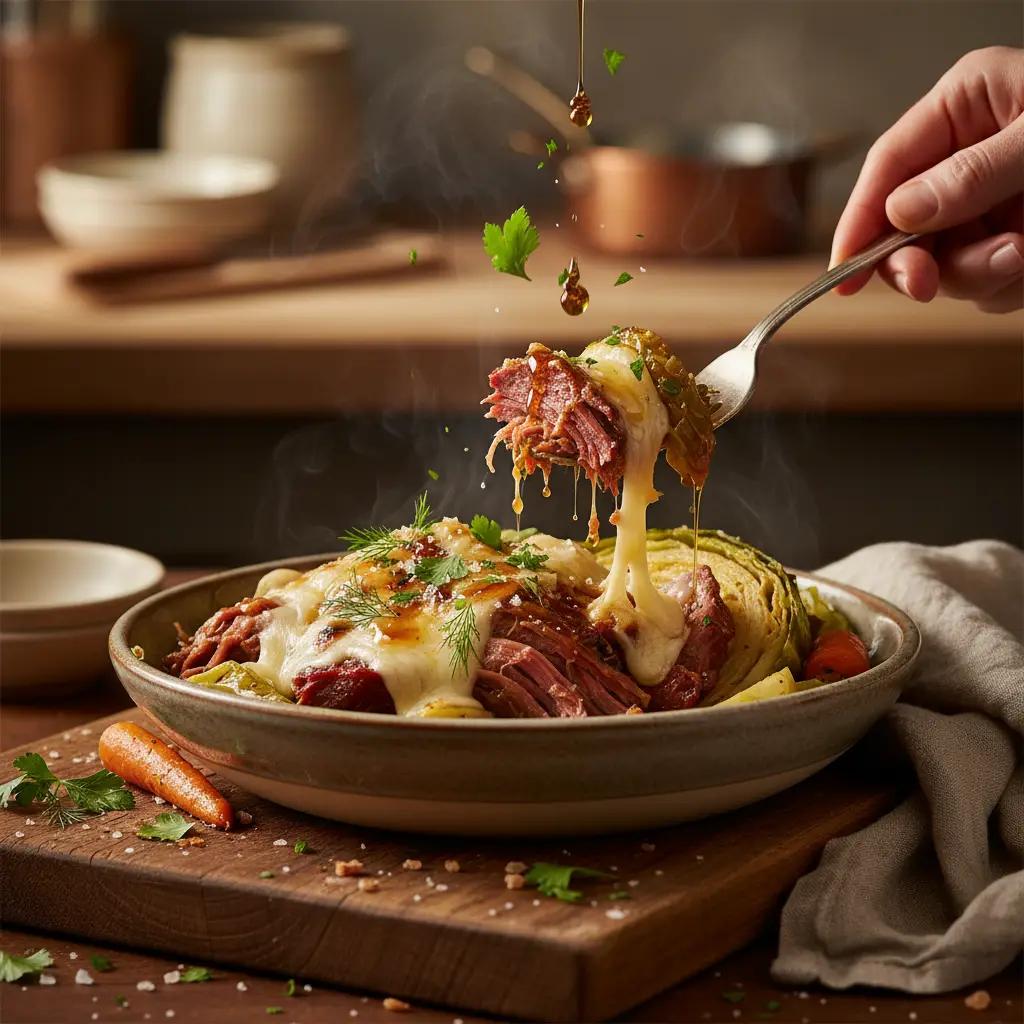
Once the beef reaches an internal temp of 165°F, it is technically safe, but it needs more time to break down collagen.
Pull the beef out and let it rest for 15 minutes before slicing. This keeps the juices locked inside the muscle fibers.
- Slice against the grain
- Save the cooking liquid for soup
- Serve with sugar-free mustard
Practical comparison
| Method | Time Required | Texture Result |
|---|---|---|
| Slow Cooker | 8-10 Hours | Very Tender |
| Stovetop | 3-4 Hours | Chewy |
| Pressure Cooker | 90 Minutes | Soft |
| Air Fryer | N/A | Not Suitable |
Frequently asked questions
Can I cook this faster?
You can use a pressure cooker, but the slow cooker yields better collagen breakdown. Stick to 8 hours on low for best results.
Is it too salty?
Rinsing the meat and using low-sodium broth prevents this. Never add extra salt until you taste the final broth.
How long does it last?
Store in an airtight container for up to 4 days in the fridge. It actually tastes better on day two.
What if the meat is tough?
It likely needs more time. Add 1 hour of cooking and ensure the liquid level is high enough.
Conclusion
Cooking corned beef in a slow cooker is the most reliable way to get a tender, low-carb feast. By using radishes and timing your cabbage, you keep the meal healthy and delicious. Give this method a try this weekend and let me know how it turns out in the comments.
RSS
Related reading
How to tell it is done (without opening and poking every minute)
- Done meat shreds under a fork with no force — colour tells you nothing here.
- If the sauce is thin at the end, take the lid off for the last 30 minutes on high: it reduces without drying.
- Every lid lift costs roughly 20 minutes of cooking. Lift it twice, maximum.
- 4 h on high ≠ 8 h on low for a lean cut: low keeps it juicy, high dries it out.
- Hard vegetables always go at the bottom — that is the hottest part of the crock.
The 5 mistakes that ruin this recipe — and the fix for each
- Skipping the sear. Five minutes in a hot pan gives the colour and flavour a slow cooker cannot build on its own.
- Too much liquid. Nothing evaporates in a slow cooker. Use about half the liquid of a stovetop recipe.
- Dairy at the start. Cream and milk split over long cooking. Add them in the last 20 minutes.
- Fresh herbs too early. They vanish over 6 hours. Dried at the start, fresh at the end.
- Cooking pasta in the pot. Pasta and rice turn to mush. Cook separately and combine at serving time.
Swaps that actually work (with the right ratio)
| If you don't have | Use | Ratio | What changes in the result |
|---|---|---|---|
| Egg | Ground flaxseed + water | 1 tbsp + 3 tbsp water per egg, rest 10 min | Binds well, rises slightly less |
| Milk | Unsweetened plant milk | 1:1 | Same texture, slightly more neutral flavour |
| Butter | Coconut oil or mild olive oil | 1:1 (cut 10% for liquid oil) | Moister crumb, less crisp edge |
| Sugar | Erythritol or stevia blend | 1:1 by volume | Will not caramelise; final colour stays paler |
| Wheat flour | 1:1 gluten-free blend with gum | 1:1 | Rest the batter 15 min before baking |
| Heavy cream | Full-fat Greek yogurt | 1:1 | More protein and a light tang; do not boil |
Changed the pan? Adjust the time like this
| Original pan | Equivalent | Time adjustment | Watch out for |
|---|---|---|---|
| 8" round | 8×8" square | Same time | Square corners bake faster |
| 9" round | 9×13" pan | −5 to −8 min | Thinner batter, check early |
| Loaf pan | 6 jumbo muffin cups | −15 to −20 min | Cupcakes bake far faster |
| Deep casserole | Two shallow dishes | −10 min | Spreads the heat and prevents a raw centre |
Store, freeze and reheat without wrecking the texture
| Where | How long | How to store | How to bring it back |
|---|---|---|---|
| Fridge | 4 days | Store with the sauce over the meat | Low heat with a splash of water |
| Freezer | 3 months | Portion into flat bags | Thaw overnight in the fridge |
| Meal prep | 3 days | Keep sauce separate from the side | Reheat the sauce before combining |
Frequently asked questions
Can I make Slow Cooker Corned Beef: 3 Simple Steps for Perfect Results ahead?
Yes. Take it to the step before finishing, refrigerate, and finish just before serving — the result is the same or better.
Can I double the recipe?
Yes. Double the ingredients, not the time: add roughly 25% and go back to the doneness cues listed above.
What is the real yield per serving?
Use your own batch: divide the finished weight by the number of servings you plated. Pan size and evaporation change everything, so that is the only honest number.
Does it work on any oven or stove?
Yes, but equipment varies by up to 35 °F. Judge by the doneness cues, not the clock, and note your own timing.
How well do leftovers keep?
Very well, following the storage table above. Freeze in flat portions: they thaw evenly and hold their texture.