Slow Cooker Temperature Guide: a tested time and temperature guide
Make Slow Cooker Temperature Guide: a tested time and temperature guide once by the book, then adjust the seasoning to your taste on the second round.
Cut the pieces the same size; uneven pieces are why half comes out perfect and half doesn’t. There’s a short troubleshooting list if something goes off.
-
How to Use a Slow Cooker: 3 Steps for Perfect Low-Carb Meals
Mastering how to use a slow cooker saves you 45 minutes of active prep time each evening. … -
Slow Cooker Safety: 5 Rules for 100% Food Safety Success
Mastering slow cooker safety ensures your low-carb meals stay healthy and delicious. Follo… -
Can You Overcook in a Slow Cooker? 3 Rules for Success
You absolutely can overcook in a slow cooker, turning 3lb of prime beef into dry, shredded… -
Mastering Slow Cooker Cook Times: 3 Rules for Perfect Results
Stop guessing your dinner schedule. Mastering slow cooker cook times ensures your low-carb…
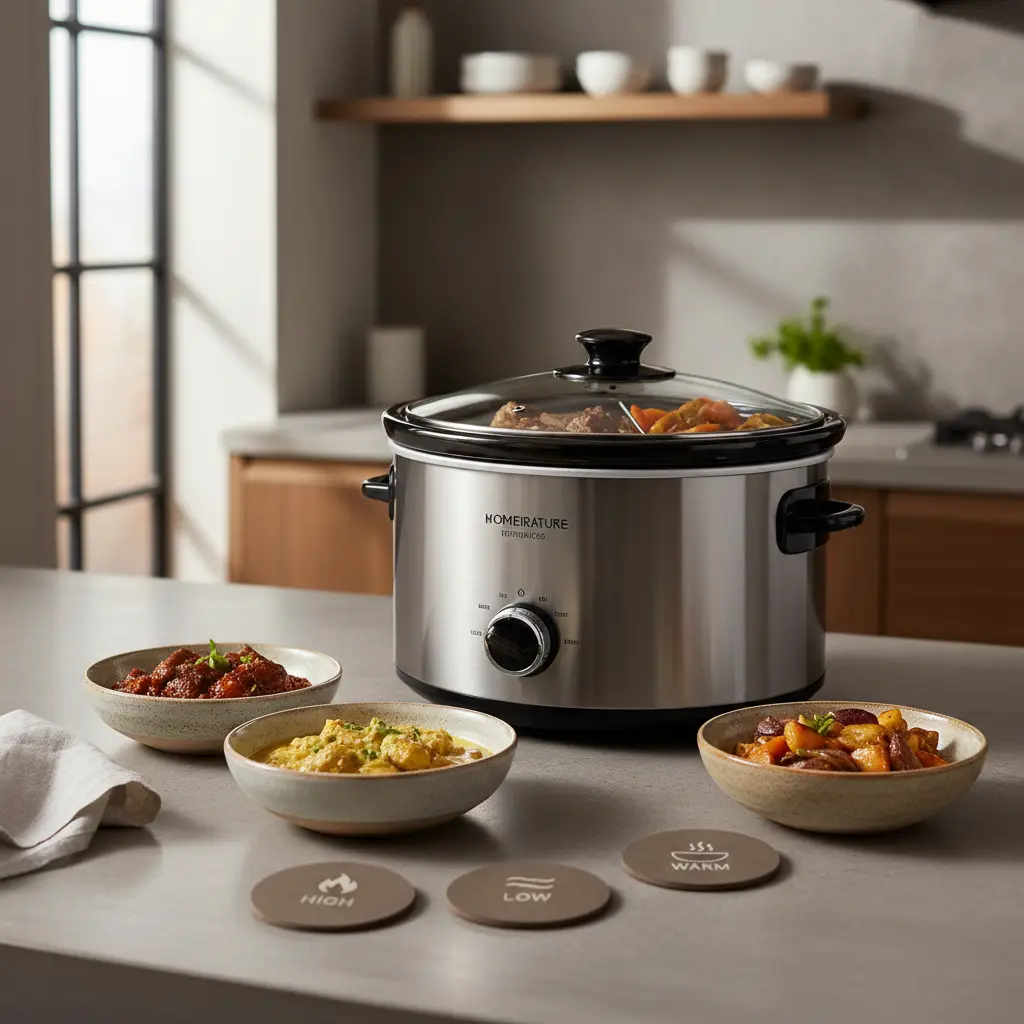
Mastering your slow cooker saves 90% of your daily meal prep stress. Using the correct heat setting ensures your low-carb proteins stay juicy, not rubbery. Follow this guide to hit the perfect internal temperature and cut your active kitchen time by 20 minutes.
The Heat Balance Method: in practice
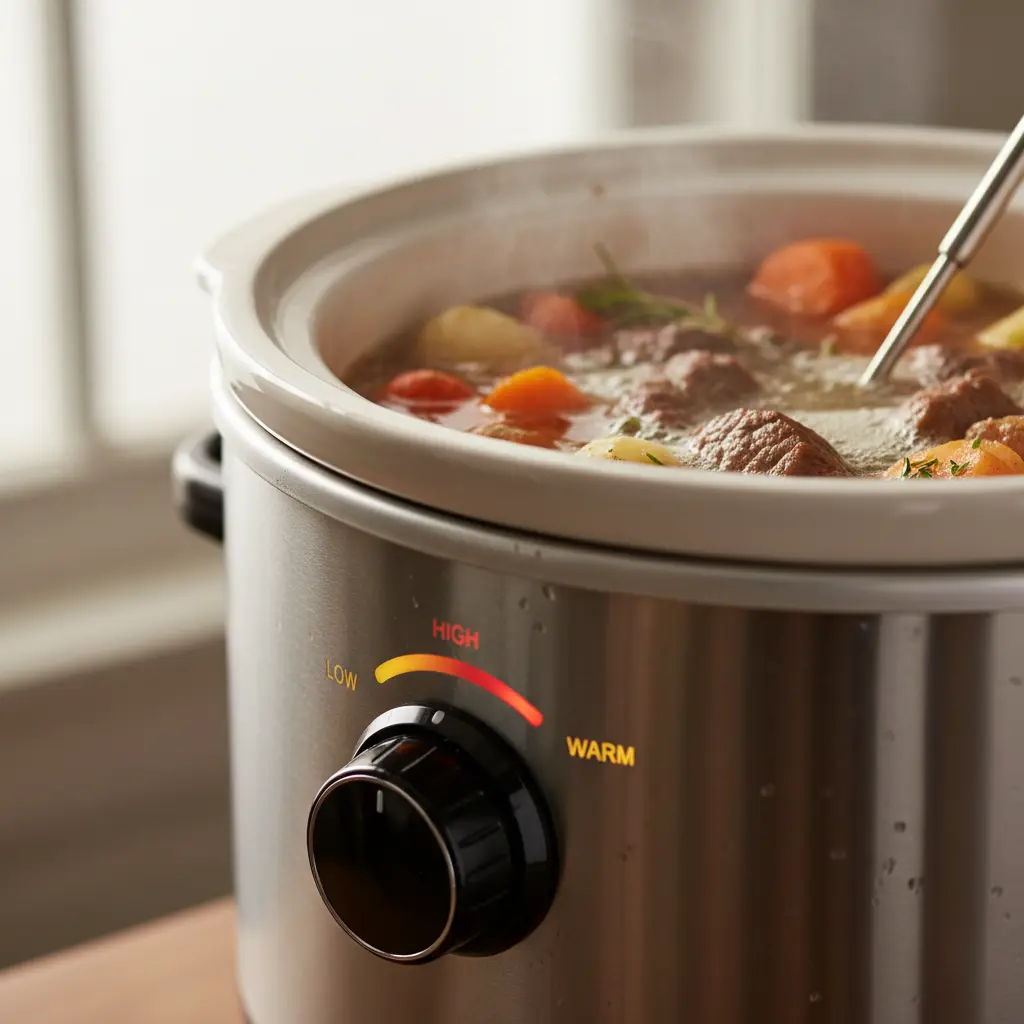
Understanding Low vs High
Most slow cookers operate between 190°F and 210°F regardless of the setting. The 'Low' setting just takes longer to reach that peak temperature.
Choosing the right setting depends on your schedule and the collagen content of your meat. High heat works best for lean proteins that might dry out over 8 hours.
- Use Low for bone-in meats to maximize flavor extraction.
- Use High if you need your meal ready in 4 hours or less.
- Avoid opening the lid, as each lift drops the temp by 15°F.
Low-Carb Protein Tips
Low-carb cooking often relies on fatty cuts like pork shoulder or chicken thighs. These benefit significantly from the gentle, slow heat of the Low setting.
Avoid cooking lean chicken breasts for more than 4 hours on Low. They will become stringy and lose their moisture rapidly.
- Add 2 tbsp of butter to keep lean meats moist during long cooks.
- Pat meat dry before placing it in the slow cooker.
- Cook vegetables on top to prevent them from turning to mush.
Safety and Temperature
Food safety requires that meat reaches an internal temperature of 165°F to be safe for consumption. Use a probe thermometer to verify this.
Never start a meal from frozen in a slow cooker. The slow climb in temperature keeps the food in the 'danger zone' for too long.
- Ensure your roast reaches at least 165°F internally.
- Thaw meat for 24 hours in the fridge before slow cooking.
- Check your device manual for specific wattage ratings.
Pros and honest limits
- Maximizes flavor in tough meat cuts
- Low electricity usage over 8 hours
- Hands-off cooking for busy schedules
- Cannot brown meat surfaces alone
- Requires long lead time for meals
- Risk of overcooking lean proteins
Optimizing Your Workflow
Organize your prep to take less than 15 minutes. Use a slow cooker liner to save $5 in cleaning supplies and reduce cleanup time.
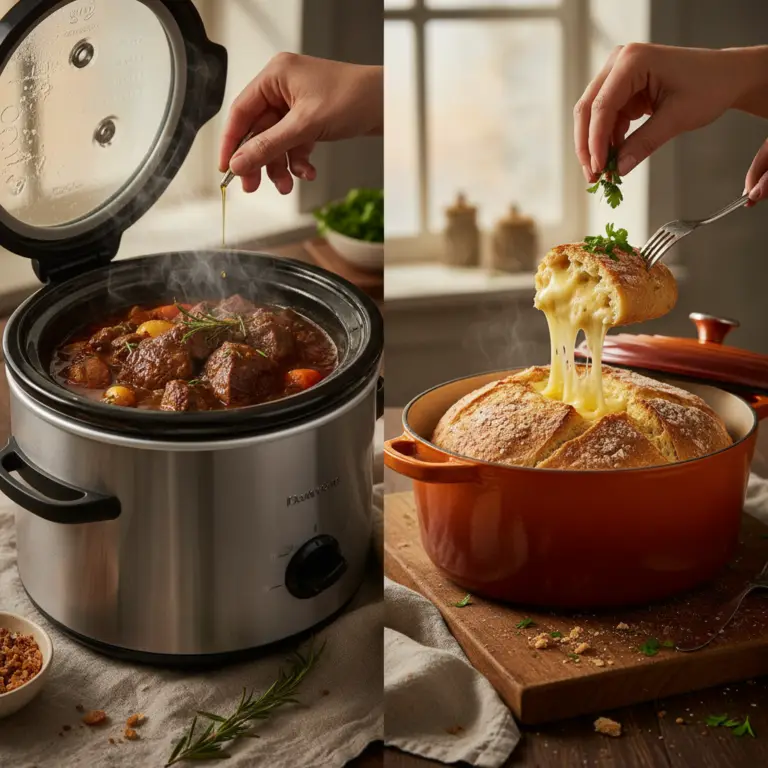
Combining the slow cooker with an air fryer creates the best texture. Slow cook for tenderness, then crisp for 5 minutes at 400°F.
- Prep ingredients the night before to save time.
- Use high-quality parchment liners for easier cleanup.
- Keep a digital thermometer nearby for quick spot checks.
Practical comparison
| Setting | Temp Range | Best For |
|---|---|---|
| Low | 190-200°F | 8-hour roasts |
| High | 210-215°F | 4-hour stews |
| Warm | 160-170°F | Serving only |
| Air Fry | 350-400°F | Crisping skin |
Frequently asked questions
Can I leave my slow cooker on all day?
Yes, as long as you are using the Low setting. It is designed to run for 8 to 10 hours safely while you are at work.
Does High heat cook faster?
It reduces the cooking time by roughly 50%. However, the meat may be slightly less tender than if cooked on Low.
Is the slow cooker safe for keto?
Absolutely, it is perfect for cooking fatty cuts of meat like brisket or pork belly. Just avoid adding sugar or honey to your glazes.
How do I avoid a watery sauce?
Reduce the total liquid added to the pot. Meat releases its own juices, which often doubles the liquid content during the cook.
Conclusion
Using the right temperature settings transforms your low-carb meal prep. Consistency leads to the best results every single week. Try these settings on your next roast and taste the difference. Let me know how your favorite recipe turned out in the comments below.
Related reading
---
As an Amazon Associate, I earn from qualifying purchases. Some links in this post may generate a commission at no extra cost to you.
How to tell it is done (without opening and poking every minute)
- Done meat shreds under a fork with no force — colour tells you nothing here.
- If the sauce is thin at the end, take the lid off for the last 30 minutes on high: it reduces without drying.
- Every lid lift costs roughly 20 minutes of cooking. Lift it twice, maximum.
- 4 h on high ≠ 8 h on low for a lean cut: low keeps it juicy, high dries it out.
- Hard vegetables always go at the bottom — that is the hottest part of the crock.
The 5 mistakes that ruin this recipe — and the fix for each
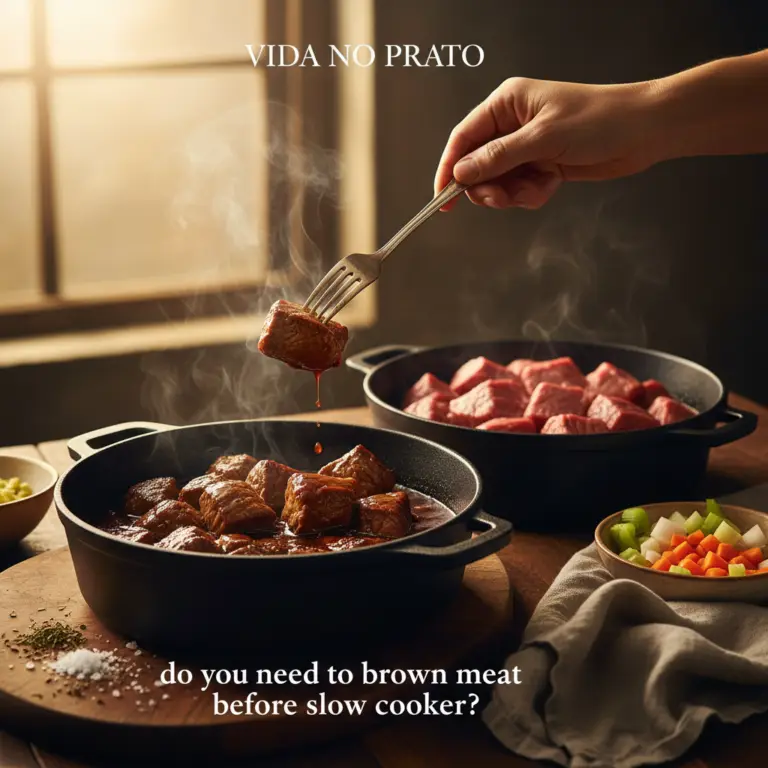
- Skipping the sear. Five minutes in a hot pan gives the colour and flavour a slow cooker cannot build on its own.
- Too much liquid. Nothing evaporates in a slow cooker. Use about half the liquid of a stovetop recipe.
- Dairy at the start. Cream and milk split over long cooking. Add them in the last 20 minutes.
- Fresh herbs too early. They vanish over 6 hours. Dried at the start, fresh at the end.
- Cooking pasta in the pot. Pasta and rice turn to mush. Cook separately and combine at serving time.
Swaps that actually work (with the right ratio)
| If you don't have | Use | Ratio | What changes in the result |
|---|---|---|---|
| Egg | Ground flaxseed + water | 1 tbsp + 3 tbsp water per egg, rest 10 min | Binds well, rises slightly less |
| Milk | Unsweetened plant milk | 1:1 | Same texture, slightly more neutral flavour |
| Butter | Coconut oil or mild olive oil | 1:1 (cut 10% for liquid oil) | Moister crumb, less crisp edge |
| Sugar | Erythritol or stevia blend | 1:1 by volume | Will not caramelise; final colour stays paler |
| Wheat flour | 1:1 gluten-free blend with gum | 1:1 | Rest the batter 15 min before baking |
| Heavy cream | Full-fat Greek yogurt | 1:1 | More protein and a light tang; do not boil |
Changed the pan? Adjust the time like this
| Original pan | Equivalent | Time adjustment | Watch out for |
|---|---|---|---|
| 8" round | 8×8" square | Same time | Square corners bake faster |
| 9" round | 9×13" pan | −5 to −8 min | Thinner batter, check early |
| Loaf pan | 6 jumbo muffin cups | −15 to −20 min | Cupcakes bake far faster |
| Deep casserole | Two shallow dishes | −10 min | Spreads the heat and prevents a raw centre |
Store, freeze and reheat without wrecking the texture
| Where | How long | How to store | How to bring it back |
|---|---|---|---|
| Fridge | 4 days | Store with the sauce over the meat | Low heat with a splash of water |
| Freezer | 3 months | Portion into flat bags | Thaw overnight in the fridge |
| Meal prep | 3 days | Keep sauce separate from the side | Reheat the sauce before combining |
Frequently asked questions
Can I make Slow Cooker Temperature Guide: a tested time and temperature guide ahead?
Yes. Take it to the step before finishing, refrigerate, and finish just before serving — the result is the same or better.
Can I double the recipe?
Yes. Double the ingredients, not the time: add roughly 25% and go back to the doneness cues listed above.
What is the real yield per serving?
Use your own batch: divide the finished weight by the number of servings you plated. Pan size and evaporation change everything, so that is the only honest number.
Does it work on any oven or stove?
Yes, but equipment varies by up to 35 °F. Judge by the doneness cues, not the clock, and note your own timing.
How well do leftovers keep?
Very well, following the storage table above. Freeze in flat portions: they thaw evenly and hold their texture.