Slow Cooker Safety: 5 Rules for 100% Food Safety Success
If your last attempt at Slow Cooker Safety: 5 Rules for 100% Food Safety Success came out dry, soggy or bland, the fix is almost always in the step most recipes skip. It’s step three here.
Season in two stages — a little at the start, the rest at the end — instead of all at once. There’s a short troubleshooting list if something goes off.
-
How to Use a Slow Cooker: 3 Steps for Perfect Low-Carb Meals
Mastering how to use a slow cooker saves you 45 minutes of active prep time each evening. … -
Slow Cooker Cabbage Soup: 8-Hour Low-Carb Comfort Method
This slow cooker cabbage soup recipe delivers a hearty, nutrient-dense meal for under $2 p… -
Slow Cooker Chicken Thighs: 3 Secrets for Juicy Results
Master the perfect slow cooker chicken thighs with this simple method. You will get tender… -
Slow Cooker Meal Prep Chicken: 5 Steps to Perfect Results
Mastering slow cooker meal prep chicken saves you 5 hours of kitchen time every week. This…
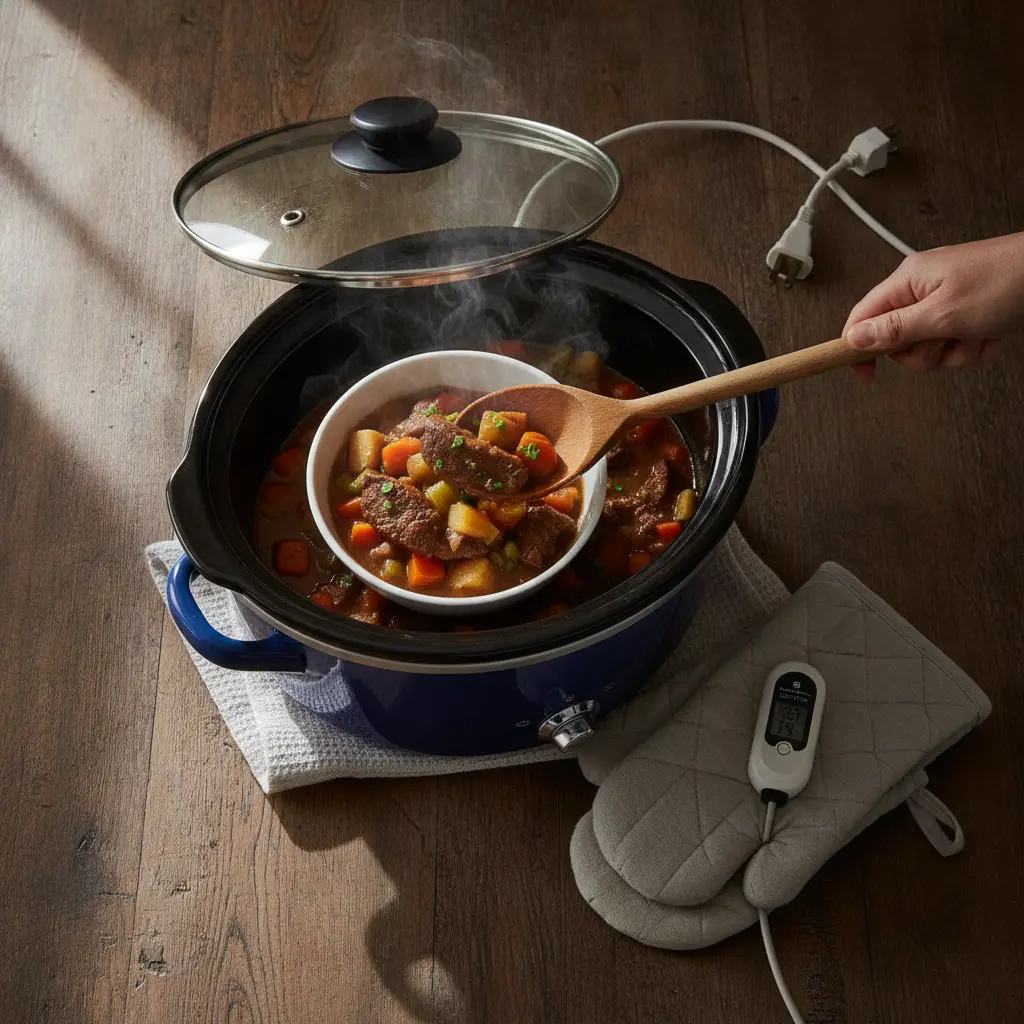
Mastering slow cooker safety ensures your low-carb meals stay healthy and delicious. Following these 5 specific guidelines prevents bacterial growth and keeps your kitchen routine efficient while ensuring your food hits the target internal temperature every time.
The Safe-Temp Protocol: in practice
Managing the Temperature Danger Zone
Bacteria multiply rapidly between 40°F and 140°F. Keeping your ingredients out of this range is the single most important rule for safe slow cooking.
Always start with thawed ingredients. Never put frozen meat directly into a cold slow cooker, as it stays in the danger zone for too long.
- Thaw meat in the refrigerator for 24 hours before cooking.
- Avoid lifting the lid, as each peek loses 10-15 minutes of heat.
- Always keep the unit plugged in and on a stable, heat-resistant surface.
Optimizing Your Low-Carb Slow Cooking
Low-carb cooking often involves high-protein meats that can dry out if overcooked. Balancing safety with texture requires precision.
Use a meat thermometer to pull your chicken or beef the second it hits the safe internal temperature. This preserves moisture while meeting safety standards.
- Use a digital probe thermometer for accuracy within 1 degree.
- Add delicate vegetables like zucchini in the last 30 minutes of cooking.
- Trim excess fat to prevent the liquid from becoming too greasy during long cycles.
Preventing Cross Contamination
Safety extends beyond the cooking cycle to your prep area. Clean surfaces are just as vital as your appliance settings.
Wash your hands for 20 seconds before handling raw proteins. Use separate cutting boards for meat and low-carb produce like cauliflower or kale.
- Sanitize countertops with a bleach solution after raw meat contact.
- Never use the same tongs for raw and finished food.
- Store leftovers in shallow containers for faster cooling in the fridge.
Pros and honest limits
- Set-and-forget convenience
- Excellent for tough meat cuts
- Keeps kitchen cool in summer
- Cannot brown meat itself
- Long cook times can dry food
- Requires planning ahead
Emergency Power Outage Procedures
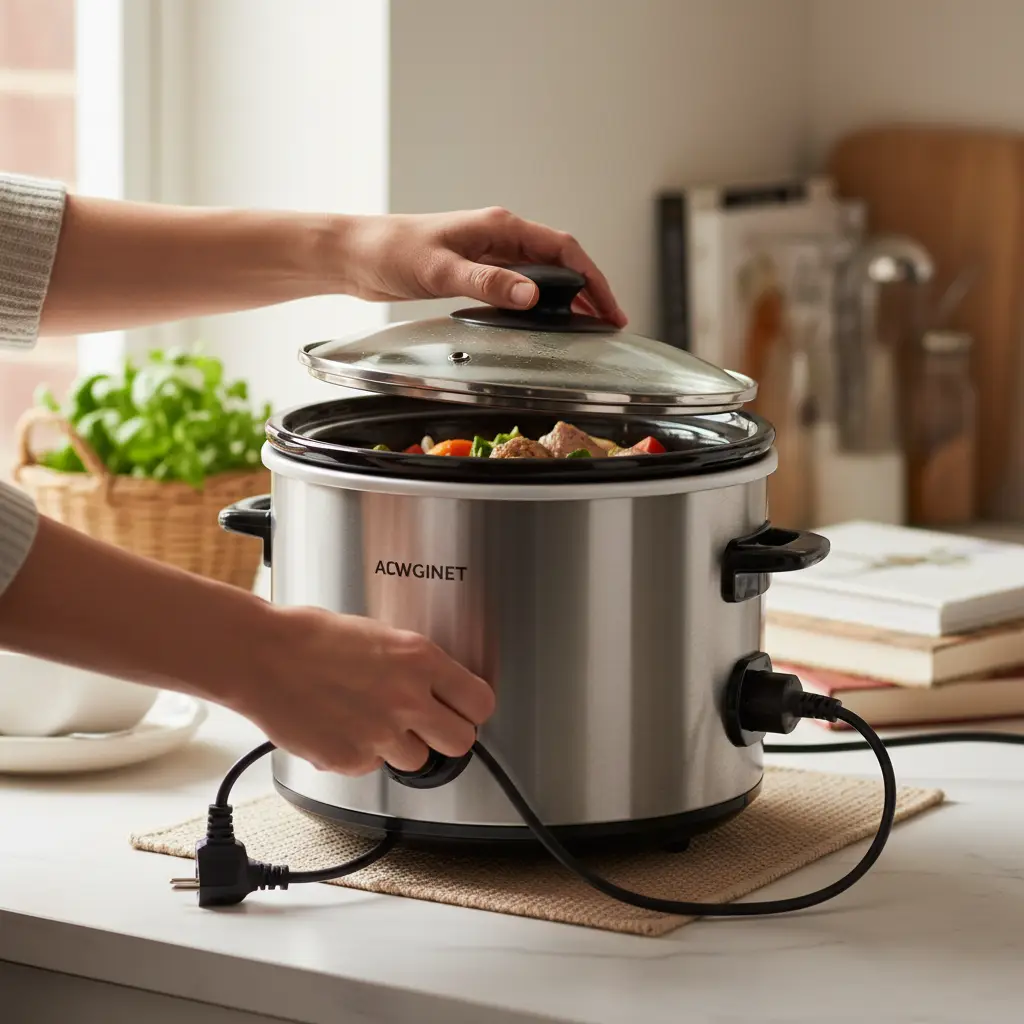
If the power goes out while you are cooking, the food safety clock starts ticking. You have a narrow window to save your meal.
If the power is off for less than 2 hours, the food is generally safe. If it exceeds 2 hours, discard the meal to avoid foodborne illness.
- Check the internal temperature if the power cuts out unexpectedly.
- Move food to the air fryer or oven immediately if it is partially cooked.
- When in doubt, throw it out; no meal is worth a case of food poisoning.
Practical comparison
| Method | Safety Level | Ease of Use |
|---|---|---|
| Slow Cooker | High | Easy |
| Air Fryer | High | Fast |
| Stovetop | Medium | Active |
| Pressure Cooker | High | Technical |
Frequently asked questions
Can I leave my slow cooker on for 12 hours?
Yes, most modern units are designed for this, provided you use the low setting and have enough liquid to prevent burning.
Is it safe to reheat food in a slow cooker?
No, never reheat leftovers in the slow cooker because it heats too slowly, leaving food in the danger zone for too long.
How do I know if my slow cooker is safe?
Perform the water test by filling it halfway with water and measuring the temp after 8 hours on low; it should be at least 185°F.
Does high altitude affect safety?
Yes, water boils at a lower temperature at high altitude. Increase your cooking time by 25% for every 2,000 feet of elevation.
Conclusion
Prioritizing slow cooker safety ensures your low-carb meal prep remains both healthy and stress-free. Stick to these temperature guidelines, keep your equipment clean, and always use a thermometer. Ready to level up your kitchen game? Subscribe for more air fryer and slow cooker tips delivered weekly.
Related reading
---
As an Amazon Associate, I earn from qualifying purchases. Some links in this post may generate a commission at no extra cost to you.
Read next
How to tell it is done (without opening and poking every minute)
- Done meat shreds under a fork with no force — colour tells you nothing here.
- If the sauce is thin at the end, take the lid off for the last 30 minutes on high: it reduces without drying.
- Every lid lift costs roughly 20 minutes of cooking. Lift it twice, maximum.
- 4 h on high ≠ 8 h on low for a lean cut: low keeps it juicy, high dries it out.
- Hard vegetables always go at the bottom — that is the hottest part of the crock.
The 5 mistakes that ruin this recipe — and the fix for each
- Skipping the sear. Five minutes in a hot pan gives the colour and flavour a slow cooker cannot build on its own.
- Too much liquid. Nothing evaporates in a slow cooker. Use about half the liquid of a stovetop recipe.
- Dairy at the start. Cream and milk split over long cooking. Add them in the last 20 minutes.
- Fresh herbs too early. They vanish over 6 hours. Dried at the start, fresh at the end.
- Cooking pasta in the pot. Pasta and rice turn to mush. Cook separately and combine at serving time.
Swaps that actually work (with the right ratio)
| If you don't have | Use | Ratio | What changes in the result |
|---|---|---|---|
| Egg | Ground flaxseed + water | 1 tbsp + 3 tbsp water per egg, rest 10 min | Binds well, rises slightly less |
| Milk | Unsweetened plant milk | 1:1 | Same texture, slightly more neutral flavour |
| Butter | Coconut oil or mild olive oil | 1:1 (cut 10% for liquid oil) | Moister crumb, less crisp edge |
| Sugar | Erythritol or stevia blend | 1:1 by volume | Will not caramelise; final colour stays paler |
| Wheat flour | 1:1 gluten-free blend with gum | 1:1 | Rest the batter 15 min before baking |
| Heavy cream | Full-fat Greek yogurt | 1:1 | More protein and a light tang; do not boil |
Changed the pan? Adjust the time like this
| Original pan | Equivalent | Time adjustment | Watch out for |
|---|---|---|---|
| 8" round | 8×8" square | Same time | Square corners bake faster |
| 9" round | 9×13" pan | −5 to −8 min | Thinner batter, check early |
| Loaf pan | 6 jumbo muffin cups | −15 to −20 min | Cupcakes bake far faster |
| Deep casserole | Two shallow dishes | −10 min | Spreads the heat and prevents a raw centre |
Store, freeze and reheat without wrecking the texture
| Where | How long | How to store | How to bring it back |
|---|---|---|---|
| Fridge | 4 days | Store with the sauce over the meat | Low heat with a splash of water |
| Freezer | 3 months | Portion into flat bags | Thaw overnight in the fridge |
| Meal prep | 3 days | Keep sauce separate from the side | Reheat the sauce before combining |
Frequently asked questions
Can I make Slow Cooker Safety: 5 Rules for 100% Food Safety Success ahead?
Yes. Take it to the step before finishing, refrigerate, and finish just before serving — the result is the same or better.
Can I double the recipe?
Yes. Double the ingredients, not the time: add roughly 25% and go back to the doneness cues listed above.
What is the real yield per serving?
Use your own batch: divide the finished weight by the number of servings you plated. Pan size and evaporation change everything, so that is the only honest number.
Does it work on any oven or stove?
Yes, but equipment varies by up to 35 °F. Judge by the doneness cues, not the clock, and note your own timing.
How well do leftovers keep?
Very well, following the storage table above. Freeze in flat portions: they thaw evenly and hold their texture.