The Best Slow Cooker for Two: our 6-point kitchen checklist
Affiliate disclosure: some links on this page are affiliate links. If you buy through them we may earn a small commission at no extra cost to you. We only recommend gear we actually test and cook with.
If your last attempt at The Best Slow Cooker for Two: our 6-point kitchen checklist came out dry, soggy or bland, the fix is almost always in the step most recipes skip. It’s step three here.
Use the visual cue, not only the clock: every oven and every pan runs a little differently. There’s a short troubleshooting list if something goes off.
-
Russet Potatoes: 5 Steps to Perfect Air Fryer Results
Russet potatoes are the gold standard for crispy textures. Master this high-starch tuber t… -
Sweet Potatoes: 5 Proven Tips for Perfect Air Fryer Texture
Mastering sweet potatoes in your air fryer saves you 20 minutes of oven time. Follow these… -
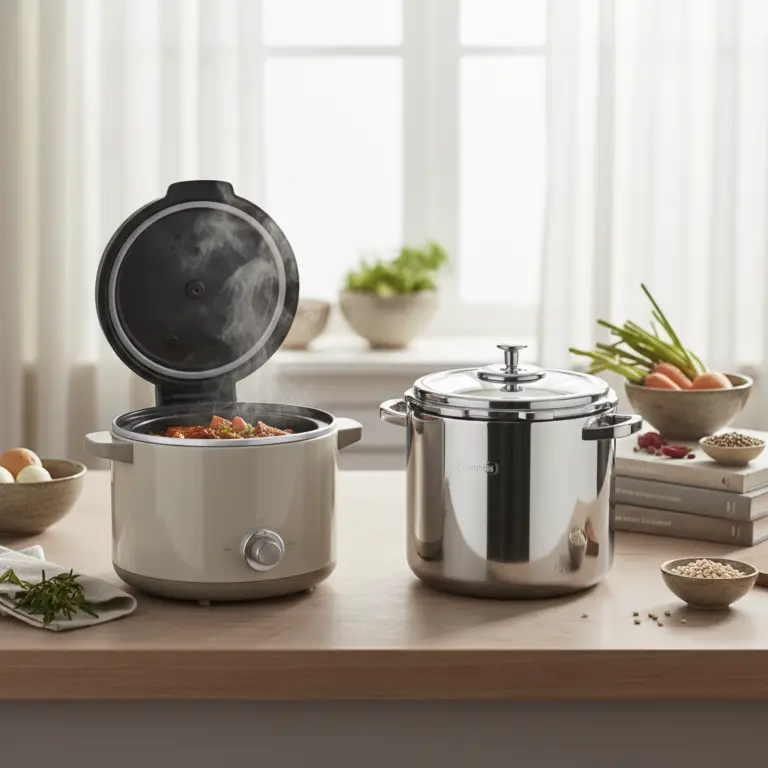
Slow Cooker vs Pressure Cooker: 3 Factors for Low-Carb Success
Choosing between a slow cooker and a pressure cooker saves me 4 hours of meal prep every w… -
Slow Cooker Electricity Cost: Save $150 a Year Cooking Low-Carb
Understanding your slow cooker electricity cost helps you manage your monthly utility bill…
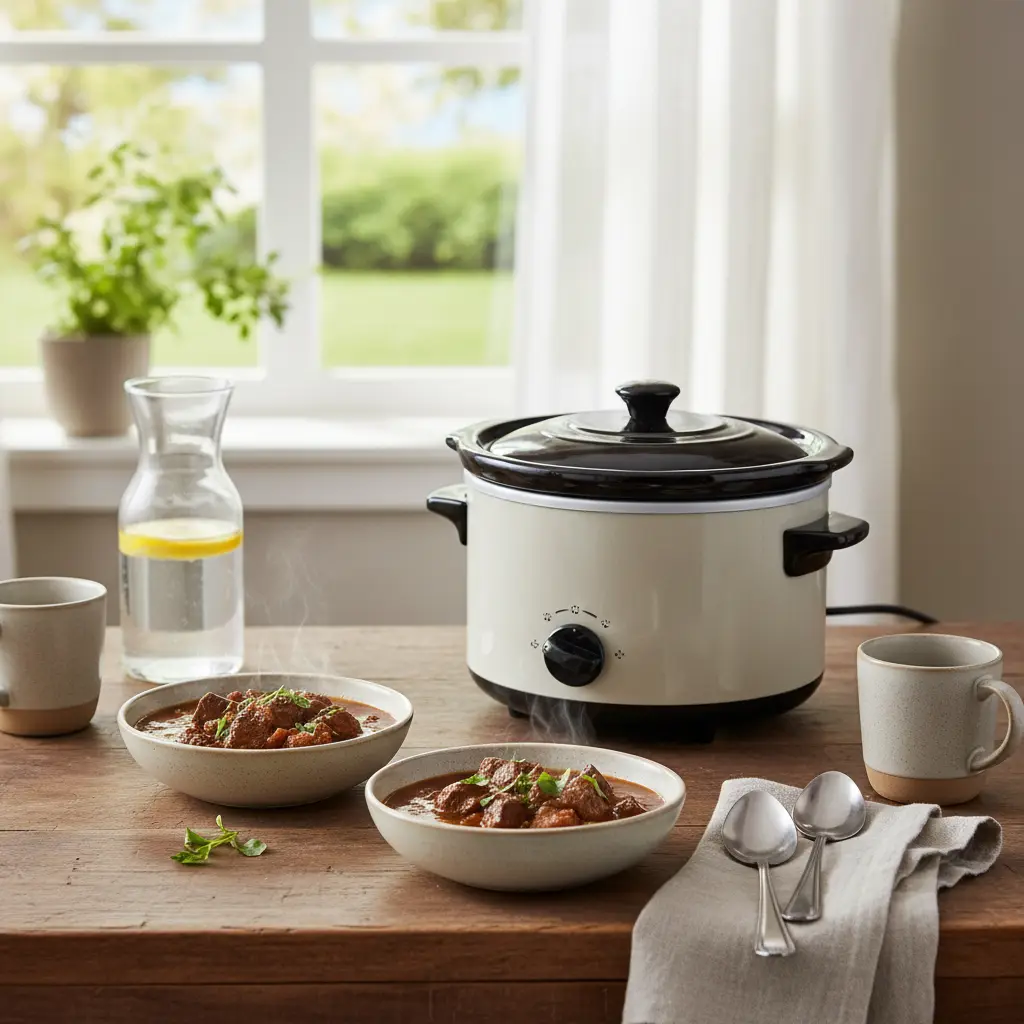
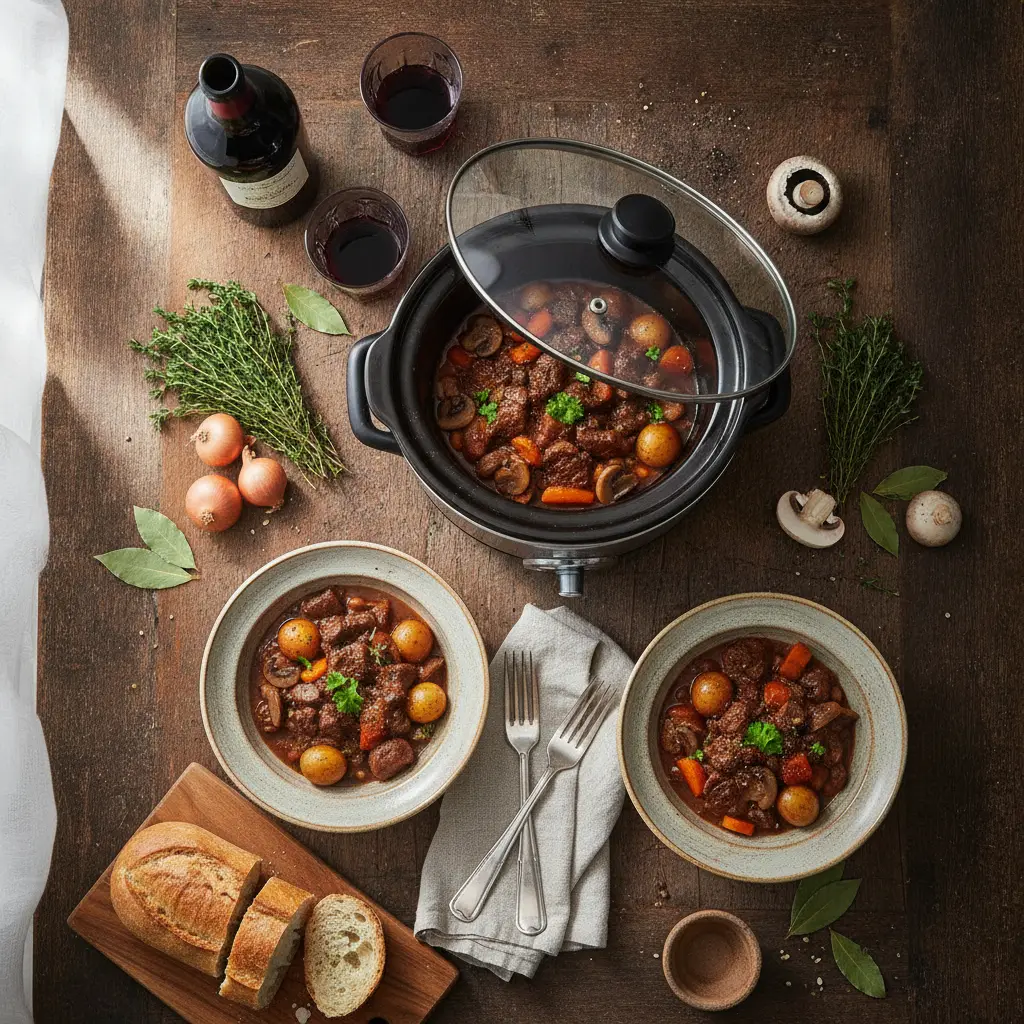
Finding the best slow cooker for two saves 50% on wasted food costs and keeps your low-carb macros on track. These compact 2-quart units prevent the dreaded 'mushy' texture common in oversized pots. Follow this guide to master small-batch, high-protein cooking without the mess.
The Mini-Pot Method: in practice
Why Size Matters for Macros
Using a massive 6-quart cooker for two people is a setup for failure. You end up with too much surface area, which leads to uneven heating and boiled-out nutrients.
A 2-quart cooker maintains the proper heat density for lean proteins. This keeps your chicken breasts tender rather than stringy or dry after 6 hours of heat.
- Saves 30% on grocery waste per week
- Maintains consistent internal temp of 190°F
- Prevents over-spicing common in large batches
Material Matters for Texture
Ceramic inserts hold heat better than metal liners. This creates a stable environment for slow-cooking tougher cuts of meat like brisket or pork shoulder.
Avoid models with 'keep warm' settings that exceed 165°F. Excess heat kills the texture of low-carb vegetables like cauliflower or zucchini.
- Ceramic prevents sticking without sprays
- Heavy lids trap 95% of moisture
- Easier to clean in under 2 minutes
Low-Carb Efficiency Hacks
Skip the starchy fillers like potatoes. Use radishes or turnips instead, as they hold up beautifully over long cook times without spiking your glucose.
Always sear your protein in an air fryer at 400°F for 4 minutes before adding it to the cooker. This adds depth of flavor that slow cooking alone lacks.
- Use bone broth for extra mineral content
- Add fresh herbs only in the final 30 minutes
- Trim all fat to prevent greasy sauces
Pros and honest limits
- Perfect portion control
- Energy efficient for small meals
- Easy to store in tiny kitchens
- Cannot cook large whole chickens
- Limited surface area for browning
- Longer recovery time if lid is opened
Maintenance and Safety
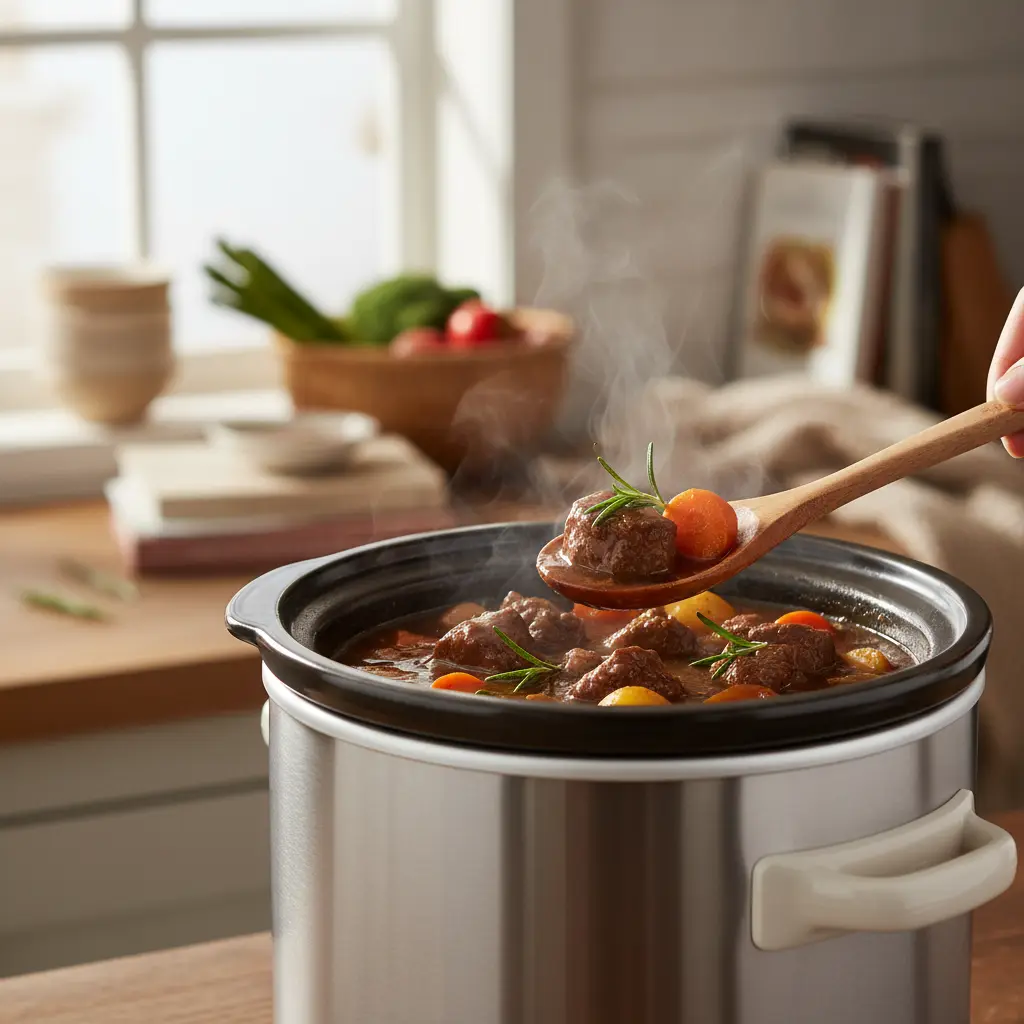
Clean your stoneware by hand rather than the dishwasher. The harsh detergents can cause micro-cracks over 12 months of regular use.
Always leave 1 inch of headspace at the top of the insert. This prevents messy boil-overs that are difficult to scrub off heating elements.
- Check cord health every 30 days
- Store with the lid upside down to air out
- Never submerge the heating base in water
Practical comparison
| Feature | 2-Quart | 6-Quart |
|---|---|---|
| Ideal Servings | 1-2 | 4-8 |
| Heat Stability | High | Low for small batches |
| Counter Space | Minimal | Large footprint |
| Cook Time | Faster | Slower to reach temp |
Frequently asked questions
Can I cook frozen meat in a small slow cooker?
It is not recommended. The slow heat causes meat to stay in the danger zone for too long, risking bacterial growth.
Is it worth buying a digital timer model?
Yes, it prevents overcooking. A simple $5 mechanical outlet timer works just as well if your model lacks a built-in one.
How do I keep low-carb veggies from getting mushy?
Add them in the final 2 hours of cooking. This keeps them tender-crisp instead of entirely soft.
Conclusion
Investing in the right tool changes your weekly meal prep routine. By focusing on 2-quart capacity, you ensure quality results every time. Start your first batch today and enjoy consistent, healthy meals that fit your lifestyle perfectly.
Related reading
---
As an Amazon Associate, I earn from qualifying purchases. Some links in this post may generate a commission at no extra cost to you.
How to tell it is done (without opening and poking every minute)
- Done meat shreds under a fork with no force — colour tells you nothing here.
- If the sauce is thin at the end, take the lid off for the last 30 minutes on high: it reduces without drying.
- Every lid lift costs roughly 20 minutes of cooking. Lift it twice, maximum.
- 4 h on high ≠ 8 h on low for a lean cut: low keeps it juicy, high dries it out.
- Hard vegetables always go at the bottom — that is the hottest part of the crock.
The 5 mistakes that ruin this recipe — and the fix for each
- Skipping the sear. Five minutes in a hot pan gives the colour and flavour a slow cooker cannot build on its own.
- Too much liquid. Nothing evaporates in a slow cooker. Use about half the liquid of a stovetop recipe.
- Dairy at the start. Cream and milk split over long cooking. Add them in the last 20 minutes.
- Fresh herbs too early. They vanish over 6 hours. Dried at the start, fresh at the end.
- Cooking pasta in the pot. Pasta and rice turn to mush. Cook separately and combine at serving time.
Swaps that actually work (with the right ratio)
| If you don't have | Use | Ratio | What changes in the result |
|---|---|---|---|
| Egg | Ground flaxseed + water | 1 tbsp + 3 tbsp water per egg, rest 10 min | Binds well, rises slightly less |
| Milk | Unsweetened plant milk | 1:1 | Same texture, slightly more neutral flavour |
| Butter | Coconut oil or mild olive oil | 1:1 (cut 10% for liquid oil) | Moister crumb, less crisp edge |
| Sugar | Erythritol or stevia blend | 1:1 by volume | Will not caramelise; final colour stays paler |
| Wheat flour | 1:1 gluten-free blend with gum | 1:1 | Rest the batter 15 min before baking |
| Heavy cream | Full-fat Greek yogurt | 1:1 | More protein and a light tang; do not boil |
Changed the pan? Adjust the time like this
| Original pan | Equivalent | Time adjustment | Watch out for |
|---|---|---|---|
| 8" round | 8×8" square | Same time | Square corners bake faster |
| 9" round | 9×13" pan | −5 to −8 min | Thinner batter, check early |
| Loaf pan | 6 jumbo muffin cups | −15 to −20 min | Cupcakes bake far faster |
| Deep casserole | Two shallow dishes | −10 min | Spreads the heat and prevents a raw centre |
Store, freeze and reheat without wrecking the texture
| Where | How long | How to store | How to bring it back |
|---|---|---|---|
| Fridge | 4 days | Store with the sauce over the meat | Low heat with a splash of water |
| Freezer | 3 months | Portion into flat bags | Thaw overnight in the fridge |
| Meal prep | 3 days | Keep sauce separate from the side | Reheat the sauce before combining |
Frequently asked questions
Can I make The Best Slow Cooker for Two: our 6-point kitchen checklist ahead?
Yes. Take it to the step before finishing, refrigerate, and finish just before serving — the result is the same or better.
Can I double the recipe?
Yes. Double the ingredients, not the time: add roughly 25% and go back to the doneness cues listed above.
What is the real yield per serving?
Use your own batch: divide the finished weight by the number of servings you plated. Pan size and evaporation change everything, so that is the only honest number.
Does it work on any oven or stove?
Yes, but equipment varies by up to 35 °F. Judge by the doneness cues, not the clock, and note your own timing.
How well do leftovers keep?
Very well, following the storage table above. Freeze in flat portions: they thaw evenly and hold their texture.