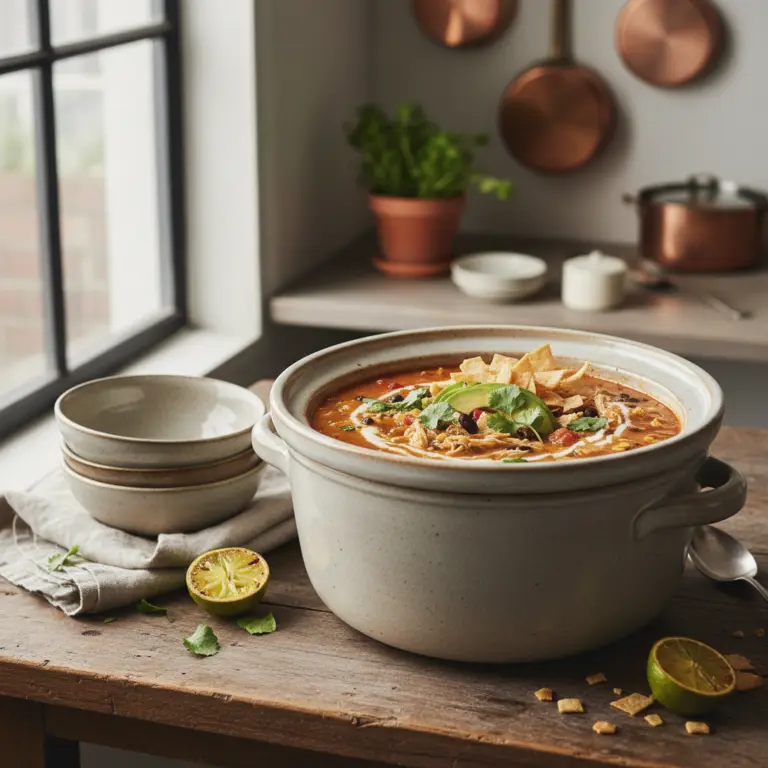
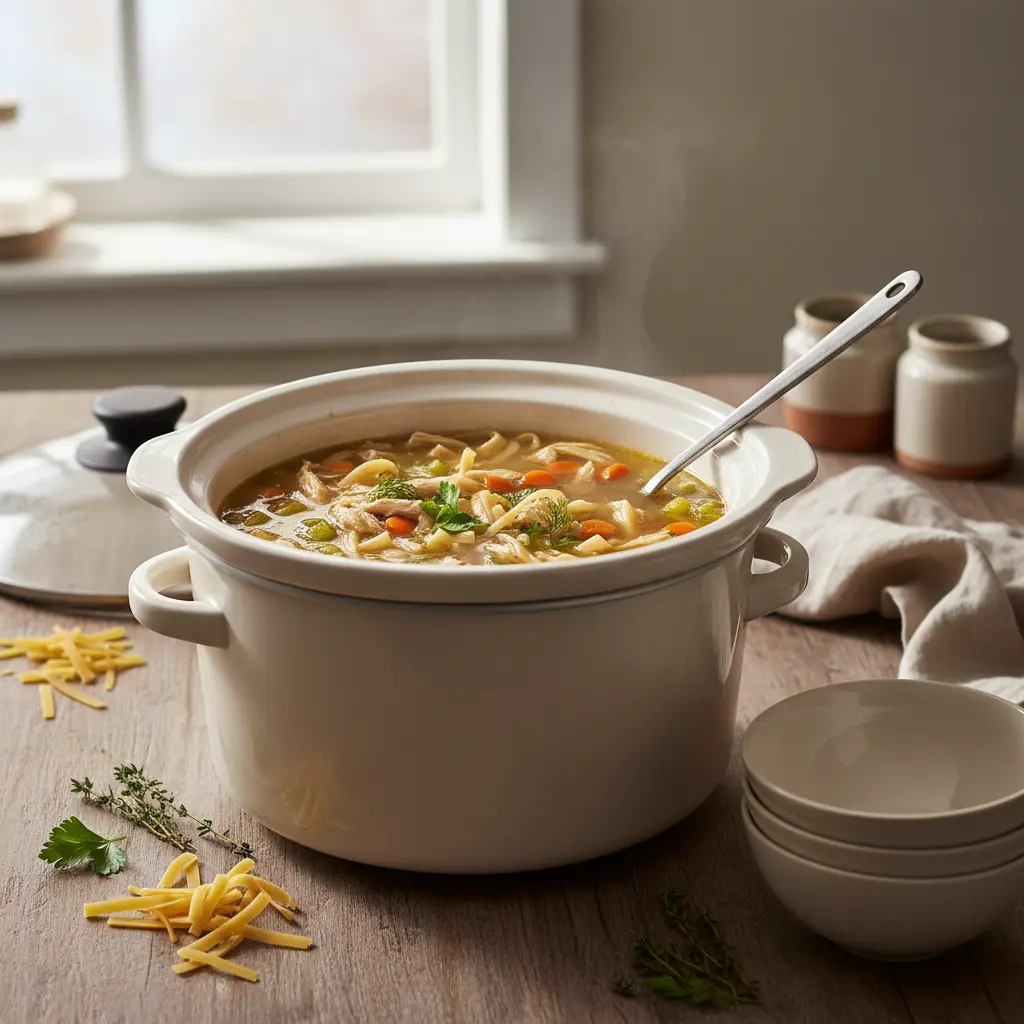
Slow Cooker Chicken Noodle Soup: 3 Secrets for Keto Success
This version of Slow Cooker Chicken Noodle Soup: 3 Secrets for Keto Success is written for a normal weeknight kitchen: everyday ingredients, one pan, no special equipment.
Dry the surface before it hits the heat; moisture is the enemy of browning. There’s a short troubleshooting list if something goes off.
-
Slow Cooker Whole Chicken: 3 Steps to Perfect Low-Carb Meals
Master the slow cooker whole chicken to yield 4 servings of juicy, tender meat. This metho… -
Slow Cooker Cabbage Soup: 8-Hour Low-Carb Comfort Method
This slow cooker cabbage soup recipe delivers a hearty, nutrient-dense meal for under $2 p… -
Slow Cooker Chicken Thighs: 3 Secrets for Juicy Results
Master the perfect slow cooker chicken thighs with this simple method. You will get tender… -
Slow Cooker Safety: 5 Rules for 100% Food Safety Success
Mastering slow cooker safety ensures your low-carb meals stay healthy and delicious. Follo…
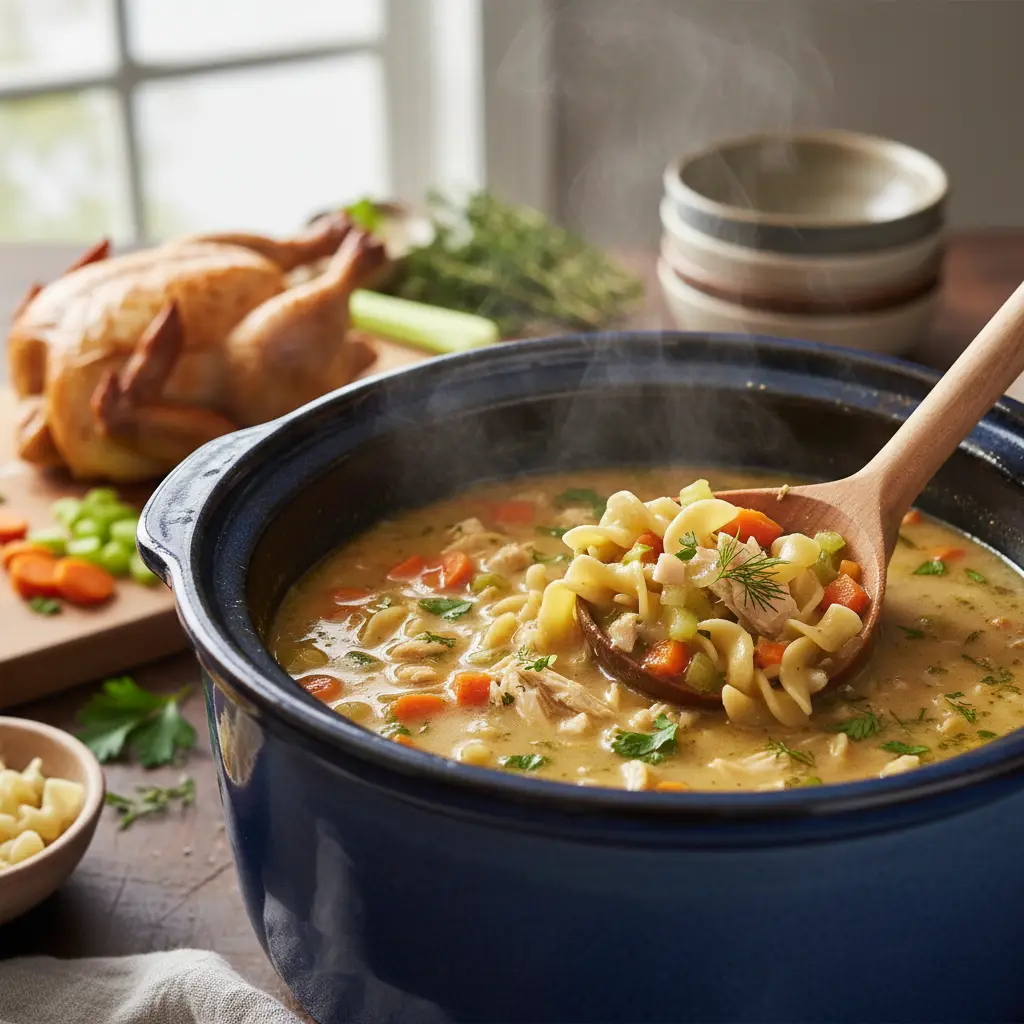
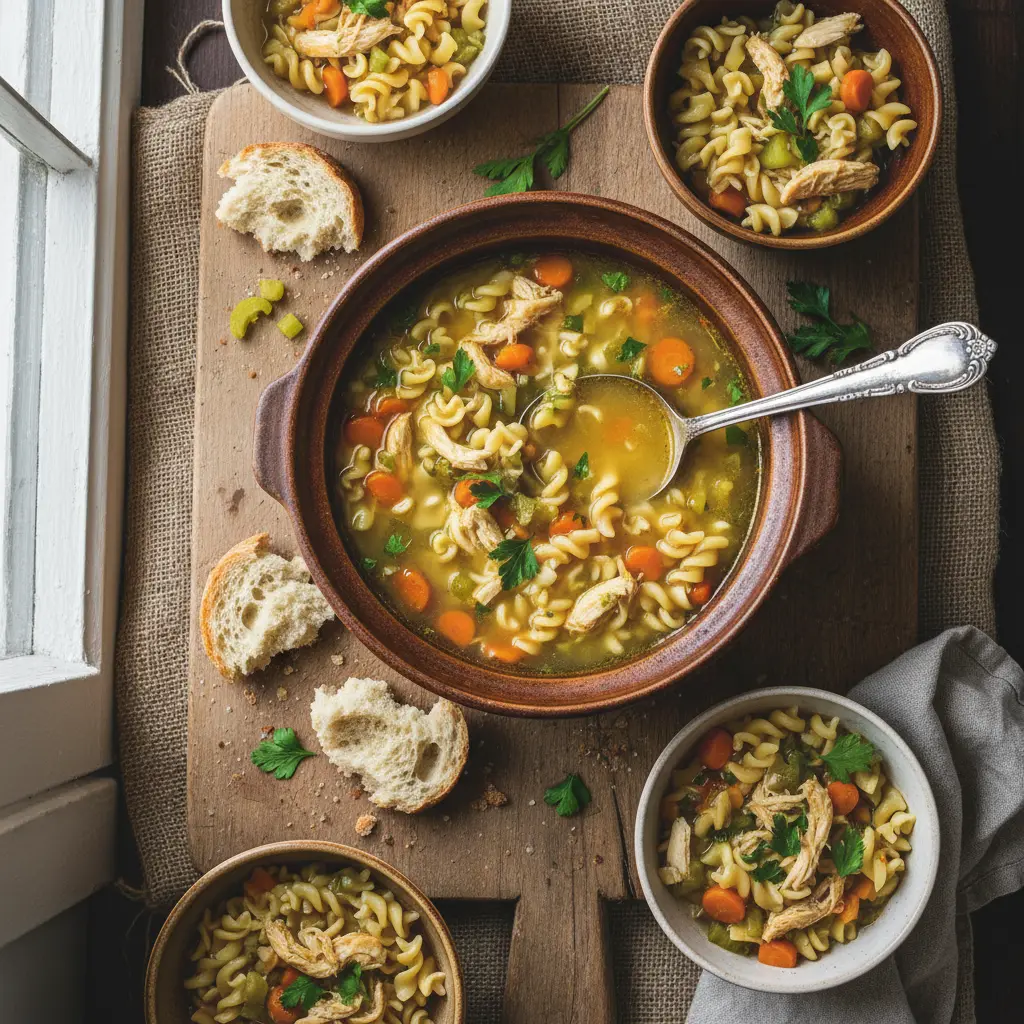
This slow cooker chicken noodle soup delivers 100% comfort without the carb crash. By swapping traditional wheat pasta for heartier alternatives, you get a bowl with less than 8g net carbs in just 6 hours of hands-off cooking.
The Low-Carb Swap: in practice
Why Thighs Beat Breasts
Chicken breasts often dry out during long 6-hour cooking cycles. Thighs stay juicy and hold up better to the slow heat.
The higher fat content in thighs improves the broth's mouthfeel significantly. You save about $3 per meal by choosing thighs over breasts.
- Always use bone-in thighs for a richer broth.
- Remove skin before cooking to prevent excess grease.
- Keep the meat chunks at least 2 inches wide.
Mastering the Broth Base
A store-bought broth is fine, but homemade bone broth adds collagen. This provides a thicker, more satisfying texture without using flour thickeners.
Simmering with celery and onion for the full duration is essential. Avoid adding delicate herbs until the final 30 minutes to preserve their oils.
- Use 6 cups of liquid for a concentrated flavor.
- Add 1 tsp of apple cider vinegar to pull minerals out.
- Salt only in the final stages to control salinity.
Handling Low-Carb Noodles
Low-carb noodles like shirataki or kelp do not absorb broth like wheat pasta. They act as a vehicle for the soup, so don't overcook them.
If using zucchini, add it only 5 minutes before serving. It will release water and thin the broth if cooked too long.
- Rinse shirataki noodles in cold water for 2 minutes.
- Dry noodles thoroughly before adding to the pot.
- Use a spiralizer to keep zucchini ribbons consistent.
Pros and honest limits
- Extremely hands-off cooking
- High protein content
- Perfect for meal prep
- Low-carb noodles vary in texture
- Requires advanced planning
- Broth can thin if over-watered
Storage and Reheating
Soup keeps well in the fridge for up to 4 days. Store the noodles separately if possible to prevent them from turning mushy.
Reheat individual portions in the microwave for 2 minutes. Do not boil the soup again or the chicken texture will begin to break down.
- Use airtight glass containers for best shelf life.
- Freeze leftovers in 2-cup portions for easy lunches.
- Add fresh parsley when reheating for bright flavor.
Practical comparison
| Noodle Type | Carbs/Serving | Cook Time |
|---|---|---|
| Wheat Pasta | 40g | 10 min |
| Shirataki | 1g | 5 min |
| Zucchini | 4g | 3 min |
| Kelp | 2g | 2 min |
Frequently asked questions
Can I use frozen chicken?
It is safer to thaw the chicken first. Cooking frozen meat in a slow cooker keeps it in the 'danger zone' for too long.
Why is my broth cloudy?
Cloudy broth usually comes from boiling the chicken too fast. Ensure your slow cooker is set to the low setting for a gentle simmer.
Can I freeze this soup?
Yes, but freeze it without the noodles. Add fresh noodles when you thaw and reheat the soup later.
Conclusion
This slow cooker chicken noodle soup is the ultimate low-carb comfort food. With these adjustments, you can enjoy a bowl without breaking your macros. Grab your slow cooker and start your batch today—your future self will thank you for the easy lunches this week.
Related reading
---
As an Amazon Associate, I earn from qualifying purchases. Some links in this post may generate a commission at no extra cost to you.
Leia também: keto slow cooker taco soup
Leia também: slow cooker black bean soup
Leia também: slow cooker potato soup
Read next
How to tell it is done (without opening and poking every minute)
- Done meat shreds under a fork with no force — colour tells you nothing here.
- If the sauce is thin at the end, take the lid off for the last 30 minutes on high: it reduces without drying.
- Every lid lift costs roughly 20 minutes of cooking. Lift it twice, maximum.
- 4 h on high ≠ 8 h on low for a lean cut: low keeps it juicy, high dries it out.
- Hard vegetables always go at the bottom — that is the hottest part of the crock.
The 5 mistakes that ruin this recipe — and the fix for each
- Skipping the sear. Five minutes in a hot pan gives the colour and flavour a slow cooker cannot build on its own.
- Too much liquid. Nothing evaporates in a slow cooker. Use about half the liquid of a stovetop recipe.
- Dairy at the start. Cream and milk split over long cooking. Add them in the last 20 minutes.
- Fresh herbs too early. They vanish over 6 hours. Dried at the start, fresh at the end.
- Cooking pasta in the pot. Pasta and rice turn to mush. Cook separately and combine at serving time.
Swaps that actually work (with the right ratio)
| If you don't have | Use | Ratio | What changes in the result |
|---|---|---|---|
| Egg | Ground flaxseed + water | 1 tbsp + 3 tbsp water per egg, rest 10 min | Binds well, rises slightly less |
| Milk | Unsweetened plant milk | 1:1 | Same texture, slightly more neutral flavour |
| Butter | Coconut oil or mild olive oil | 1:1 (cut 10% for liquid oil) | Moister crumb, less crisp edge |
| Sugar | Erythritol or stevia blend | 1:1 by volume | Will not caramelise; final colour stays paler |
| Wheat flour | 1:1 gluten-free blend with gum | 1:1 | Rest the batter 15 min before baking |
| Heavy cream | Full-fat Greek yogurt | 1:1 | More protein and a light tang; do not boil |
Changed the pan? Adjust the time like this
| Original pan | Equivalent | Time adjustment | Watch out for |
|---|---|---|---|
| 8" round | 8×8" square | Same time | Square corners bake faster |
| 9" round | 9×13" pan | −5 to −8 min | Thinner batter, check early |
| Loaf pan | 6 jumbo muffin cups | −15 to −20 min | Cupcakes bake far faster |
| Deep casserole | Two shallow dishes | −10 min | Spreads the heat and prevents a raw centre |
Store, freeze and reheat without wrecking the texture
| Where | How long | How to store | How to bring it back |
|---|---|---|---|
| Fridge | 4 days | Store with the sauce over the meat | Low heat with a splash of water |
| Freezer | 3 months | Portion into flat bags | Thaw overnight in the fridge |
| Meal prep | 3 days | Keep sauce separate from the side | Reheat the sauce before combining |
Frequently asked questions
Can I make Slow Cooker Chicken Noodle Soup: 3 Secrets for Keto Success ahead?
Yes. Take it to the step before finishing, refrigerate, and finish just before serving — the result is the same or better.
Can I double the recipe?
Yes. Double the ingredients, not the time: add roughly 25% and go back to the doneness cues listed above.
What is the real yield per serving?
Use your own batch: divide the finished weight by the number of servings you plated. Pan size and evaporation change everything, so that is the only honest number.
Does it work on any oven or stove?
Yes, but equipment varies by up to 35 °F. Judge by the doneness cues, not the clock, and note your own timing.
How well do leftovers keep?
Very well, following the storage table above. Freeze in flat portions: they thaw evenly and hold their texture.