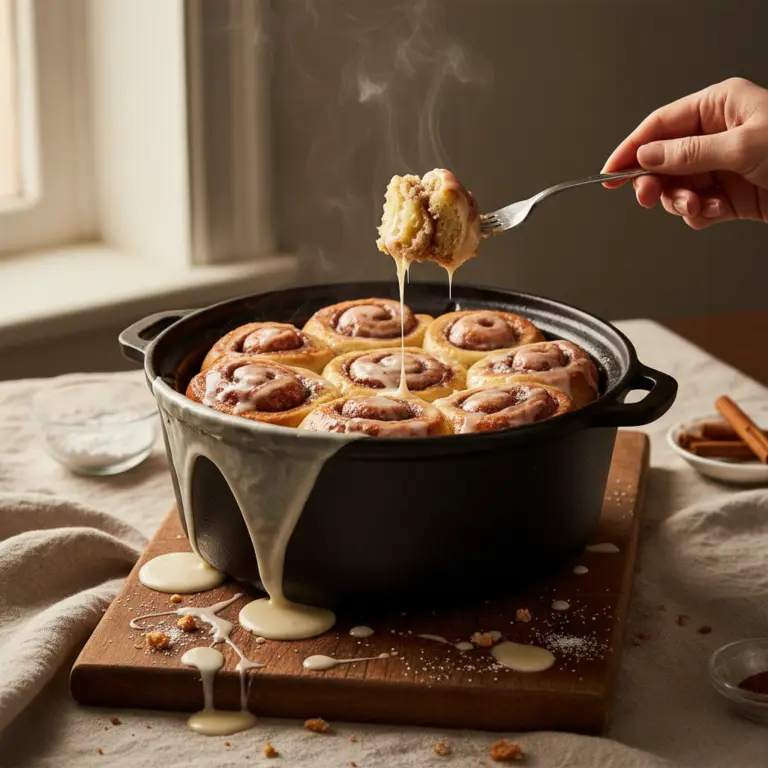
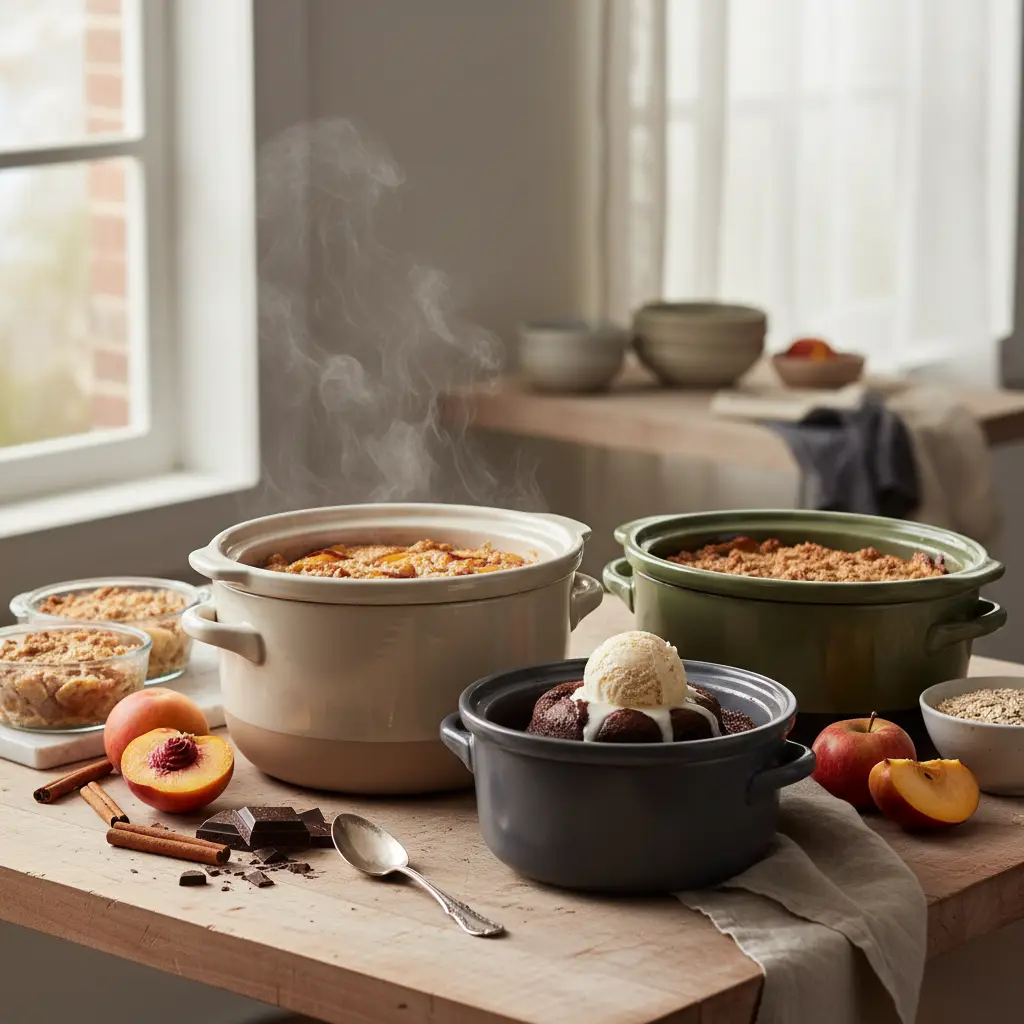
Crock Pot Desserts: 5 Low-Carb Hacks for Perfect Sweets
Crock Pot Desserts: 5 Low-Carb Hacks for Perfect Sweets is easier than it looks once you know what the texture should feel like at each stage — that’s what the photos and cues below are for.
Dry the surface before it hits the heat; moisture is the enemy of browning. Substitutions for the two trickiest ingredients are listed below.
-
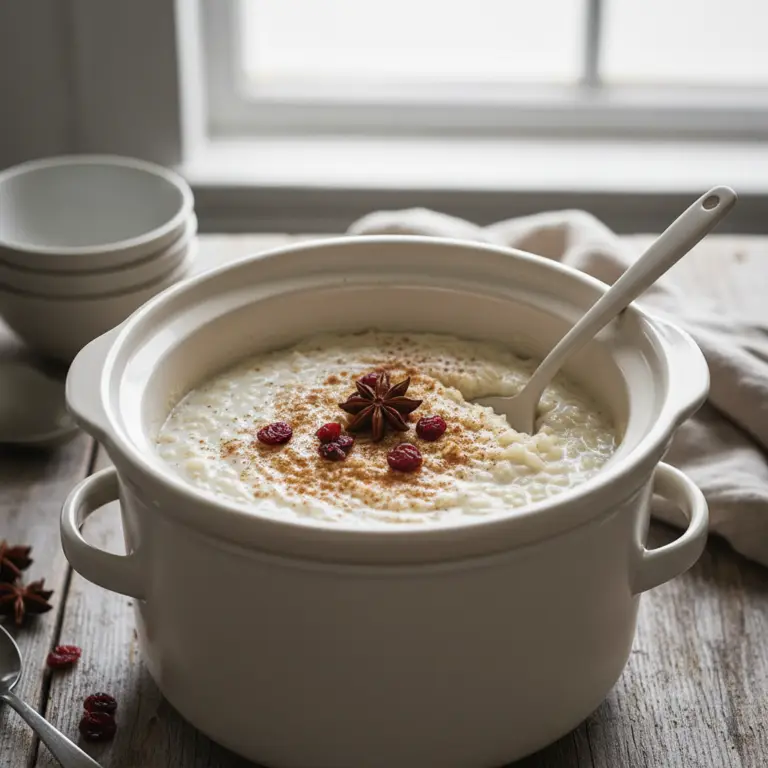
Slow Cooker Rice Pudding: 3 Steps to Perfect Creamy Comfort
This slow cooker rice pudding recipe yields 6 servings of creamy, restaurant-quality desse… -
Slow Cooker Rice Pudding: 3 Steps to Perfect Creamy Texture
Mastering slow cooker rice pudding requires only 5 minutes of active prep time. This metho… -
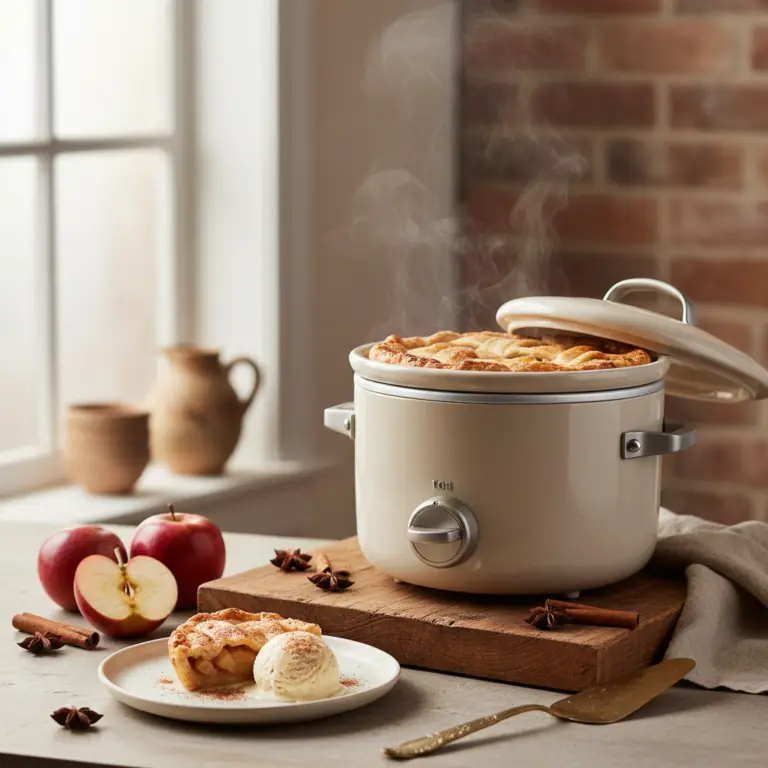
Slow Cooker Pumpkin Pie: 1 Perfect Low-Carb Recipe
This slow cooker pumpkin pie method saves 30 minutes of oven time. You get a custard-like … -
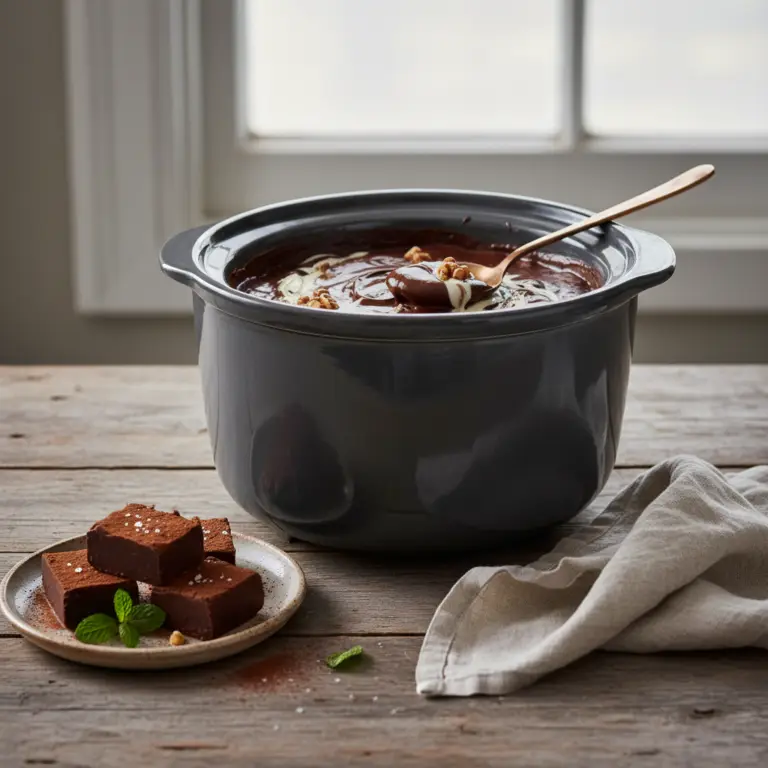
Slow Cooker Lava Cake: 1 Easy Low-Carb Recipe
Master the art of the perfect molten center with this low-carb slow cooker lava cake. You …
Master these 5 crock pot desserts to satisfy your sweet tooth without spiking blood sugar. You can achieve a rich, decadent finish in under 4 hours of hands-off cooking time.
The Slow-Set Method: in practice
Choosing the Right Sweeteners
Sugar alcohols like erythritol behave differently in slow cookers than granulated sugar. They tend to crystallize if they get too hot for too long.
Stick to blends that include monk fruit for a smoother melt. This helps maintain the structure of your dessert during the long cook cycle.
- Use a 1:1 sugar replacement ratio.
- Avoid liquid sweeteners early in the process.
- Always sift dry ingredients to prevent clumps.
Managing Moisture Levels
Slow cookers are essentially steam traps. Since low-carb flours lack gluten, they can become gummy if too much condensation collects inside.
Always use a liner or grease the sides heavily. This makes cleanup faster and prevents the edges from turning into a burnt, rubbery crust.
- Use a paper towel under the lid.
- Check for doneness 30 minutes early.
- Avoid opening the lid until necessary.
Temperature Control Tips
Most slow cookers fluctuate between 190°F and 210°F on the low setting. This is the sweet spot for keto-friendly baking without burning the fats.
If your unit runs hot, place it on a trivet or use a silicone insert. This provides a buffer against the direct heat of the heating element.
- Test your unit with a meat thermometer.
- Use the low setting for all desserts.
- Rotate the insert halfway through cooking.
Pros and honest limits
- Hands-off process
- Perfect for keto ingredients
- Consistent heat distribution
- Long cook times
- Requires moisture management
- Can become rubbery if overcooked
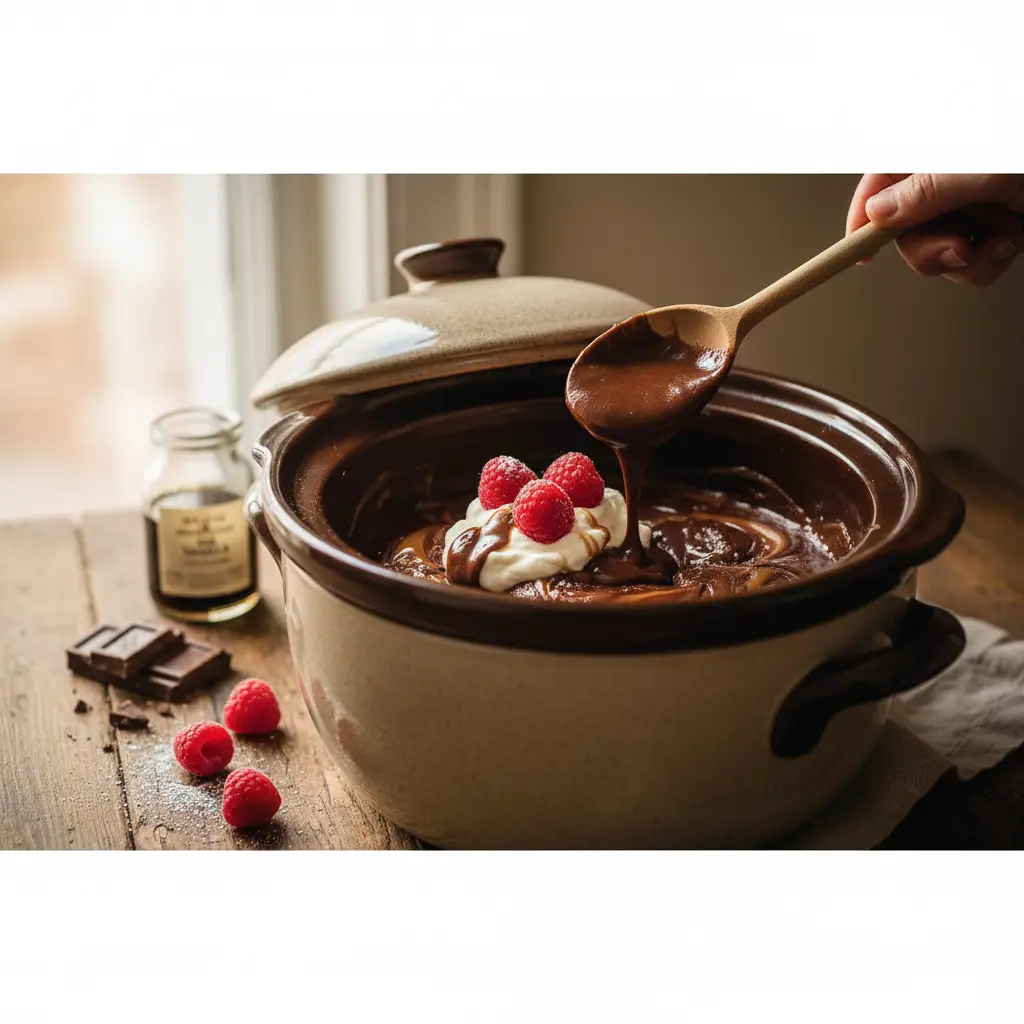
Pairing with Air Fryer Toppings
Sometimes a slow-cooked dessert needs a crunch. Use your air fryer to toast nuts or shredded coconut for 3 minutes at 350°F to sprinkle on top.
This contrast between the soft, warm base and the crispy air-fried topping creates a professional-grade dessert experience at home.
- Toast pecans for 3 minutes.
- Crisp up sugar-free coconut flakes.
- Add toppings just before serving.
Practical comparison
| Dessert Type | Cook Time | Difficulty |
|---|---|---|
| Berry Cobbler | 3 hrs | Easy |
| Lava Cake | 2 hrs | Medium |
| Cheesecake | 4 hrs | Hard |
| Chocolate Pudding | 3 hrs | Easy |
Frequently asked questions
Can I use a slow cooker for keto baking?
Yes, it works well because the moist environment prevents almond flour from drying out. Just keep the lid on to trap the heat.
Why is my dessert gummy?
You likely have too much moisture trapped inside. Use the paper towel trick to absorb excess steam.
Does it save money?
It costs roughly $0.10 in electricity per use, which is significantly cheaper than running a full-sized oven for a small dessert.
Conclusion
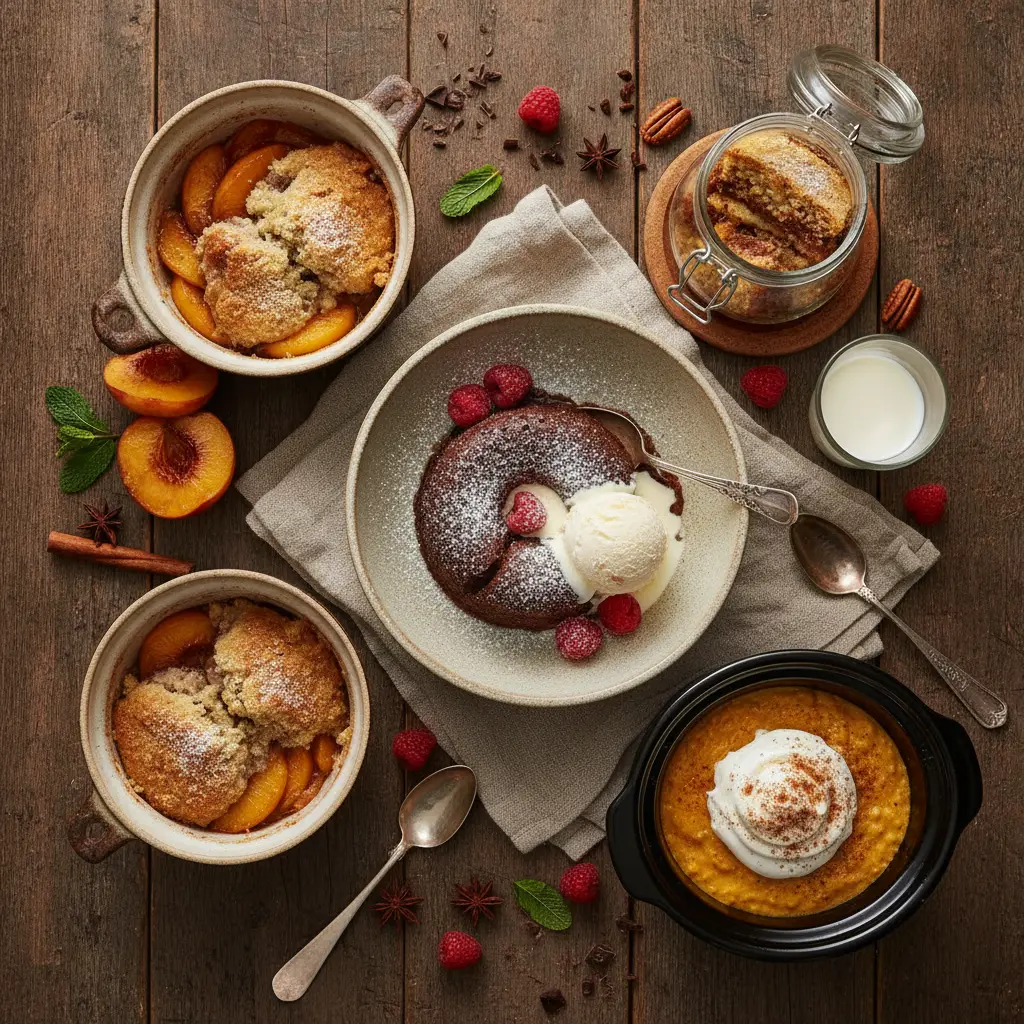
Mastering crock pot desserts is all about managing moisture and heat. With these techniques, you can enjoy low-carb treats without the stress of constant oven monitoring. Try these tips this weekend and share your results in the comments below.
Related reading
- Slow Cooker Meal Prep Low Carb: 5 Steps to Save 4 Hours Weekly
- Low Carb Pot Roast Slow Cooker: 3 Steps to Tender Perfection
- 5 High-Protein Slow Cooker Recipes for Low-Carb Success
- Slow Cooker vs Instant Pot: 5 Factors for Low-Carb Success
---
As an Amazon Associate, I earn from qualifying purchases. Some links in this post may generate a commission at no extra cost to you.
Leia também: keto crock pot soup
Leia também: low carb crock pot chili
Leia também: crock pot chicken
Leia também: slow cooker beef chili
Leia também: slow cooker pot roast
How to tell it is done (without opening and poking every minute)
- Done meat shreds under a fork with no force — colour tells you nothing here.
- If the sauce is thin at the end, take the lid off for the last 30 minutes on high: it reduces without drying.
- Every lid lift costs roughly 20 minutes of cooking. Lift it twice, maximum.
- 4 h on high ≠ 8 h on low for a lean cut: low keeps it juicy, high dries it out.
- Hard vegetables always go at the bottom — that is the hottest part of the crock.
The 5 mistakes that ruin this recipe — and the fix for each
- Skipping the sear. Five minutes in a hot pan gives the colour and flavour a slow cooker cannot build on its own.
- Too much liquid. Nothing evaporates in a slow cooker. Use about half the liquid of a stovetop recipe.
- Dairy at the start. Cream and milk split over long cooking. Add them in the last 20 minutes.
- Fresh herbs too early. They vanish over 6 hours. Dried at the start, fresh at the end.
- Cooking pasta in the pot. Pasta and rice turn to mush. Cook separately and combine at serving time.
Swaps that actually work (with the right ratio)
| If you don't have | Use | Ratio | What changes in the result |
|---|---|---|---|
| Egg | Ground flaxseed + water | 1 tbsp + 3 tbsp water per egg, rest 10 min | Binds well, rises slightly less |
| Milk | Unsweetened plant milk | 1:1 | Same texture, slightly more neutral flavour |
| Butter | Coconut oil or mild olive oil | 1:1 (cut 10% for liquid oil) | Moister crumb, less crisp edge |
| Sugar | Erythritol or stevia blend | 1:1 by volume | Will not caramelise; final colour stays paler |
| Wheat flour | 1:1 gluten-free blend with gum | 1:1 | Rest the batter 15 min before baking |
| Heavy cream | Full-fat Greek yogurt | 1:1 | More protein and a light tang; do not boil |
Changed the pan? Adjust the time like this
| Original pan | Equivalent | Time adjustment | Watch out for |
|---|---|---|---|
| 8" round | 8×8" square | Same time | Square corners bake faster |
| 9" round | 9×13" pan | −5 to −8 min | Thinner batter, check early |
| Loaf pan | 6 jumbo muffin cups | −15 to −20 min | Cupcakes bake far faster |
| Deep casserole | Two shallow dishes | −10 min | Spreads the heat and prevents a raw centre |
Store, freeze and reheat without wrecking the texture
| Where | How long | How to store | How to bring it back |
|---|---|---|---|
| Fridge | 4 days | Store with the sauce over the meat | Low heat with a splash of water |
| Freezer | 3 months | Portion into flat bags | Thaw overnight in the fridge |
| Meal prep | 3 days | Keep sauce separate from the side | Reheat the sauce before combining |
Frequently asked questions
Can I make Crock Pot Desserts: 5 Low-Carb Hacks for Perfect Sweets ahead?
Yes. Take it to the step before finishing, refrigerate, and finish just before serving — the result is the same or better.
Can I double the recipe?
Yes. Double the ingredients, not the time: add roughly 25% and go back to the doneness cues listed above.
What is the real yield per serving?
Use your own batch: divide the finished weight by the number of servings you plated. Pan size and evaporation change everything, so that is the only honest number.
Does it work on any oven or stove?
Yes, but equipment varies by up to 35 °F. Judge by the doneness cues, not the clock, and note your own timing.
How well do leftovers keep?
Very well, following the storage table above. Freeze in flat portions: they thaw evenly and hold their texture.