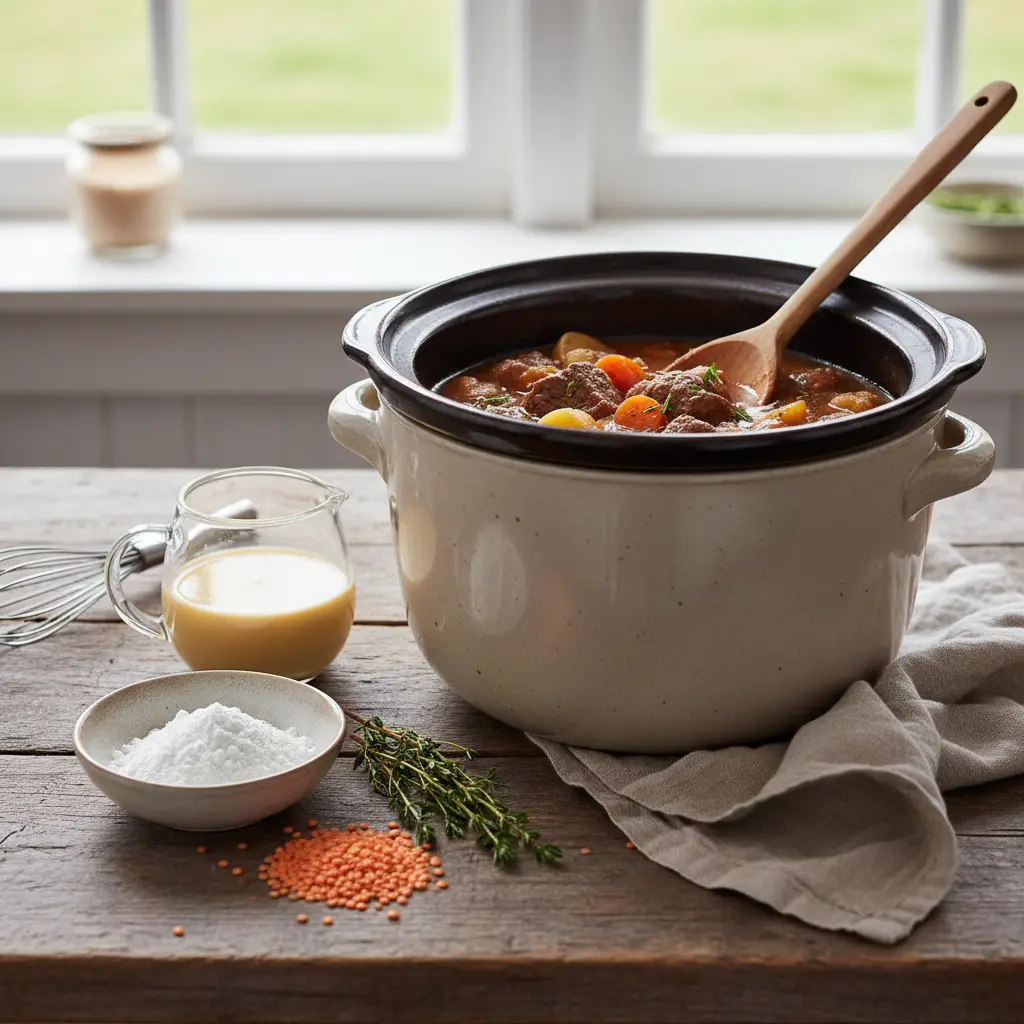
How to Thicken Slow Cooker Soup: 3 Proven Low-Carb Hacks
You came for How to Thicken Slow Cooker Soup: 3 Proven Low-Carb Hacks, so the recipe is right below — the notes after it are what keep it from going wrong the first time.
Room-temperature ingredients behave differently from cold ones — it changes the timing more than people expect. Substitutions for the two trickiest ingredients are listed below.
-
Slow Cooker Gumbo: 5 Low-Carb Secrets for Authentic Flavor
Mastering slow cooker gumbo without the carb-heavy flour roux is possible. This method sav… -
Slow Cooker Beef Barley Soup: 1 Simple Method for 8 Servings
This slow cooker beef barley soup delivers deep, savory flavor with only 15 minutes of act… -
Slow Cooker French Onion Soup: 1 Perfect Low-Carb Version
Skip the crusty bread and heavy carbs without losing the rich flavor. This slow cooker Fre… -
Slow Cooker Taco Soup: 3 Secrets for Low-Carb Flavor
This slow cooker taco soup recipe slashes carbs by 80% while keeping protein high. You get…
Stop settling for watery broth in your slow cooker. These 3 simple methods will thicken your soup to a restaurant-quality consistency in under 15 minutes. Best of all, these tricks keep your meal low-carb and keto-friendly, saving you from adding flour or cornstarch.
The Texture Trinity: in practice
Why Slow Cooker Soups Run Thin
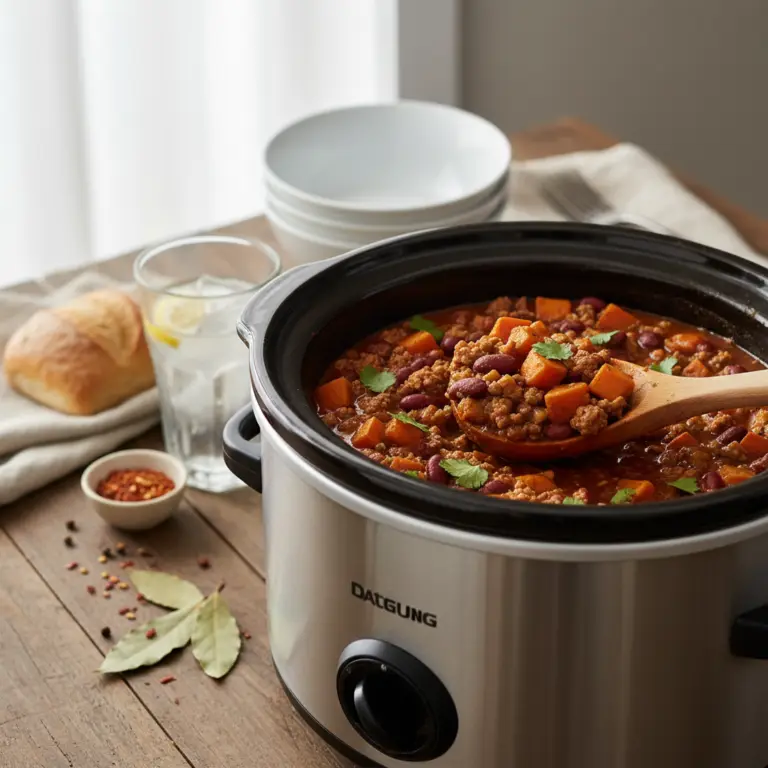
Slow cookers are designed to trap steam. This keeps your meat tender, but it prevents the liquid from evaporating.
Unlike stovetop cooking, where steam escapes constantly, the slow cooker maintains volume. You end up with 2 cups of extra water rather than a rich stew.
- Avoid adding extra water than the recipe requires.
- Keep the lid closed for the first 4 hours.
- Remember that vegetables release water as they soften.
The Power of Low-Carb Thickeners
Avoid high-carb flour or cornstarch at all costs. These spike blood sugar and ruin your keto macros.
Xanthan gum is the gold standard for low-carb thickening. A tiny amount goes a long way, costing only pennies per serving.
- Use 1/4 tsp of xanthan gum per 4 cups of liquid.
- Always dissolve gum in oil or cold broth first.
- Add it slowly to avoid clumping in the pot.
Using Dairy for Richness
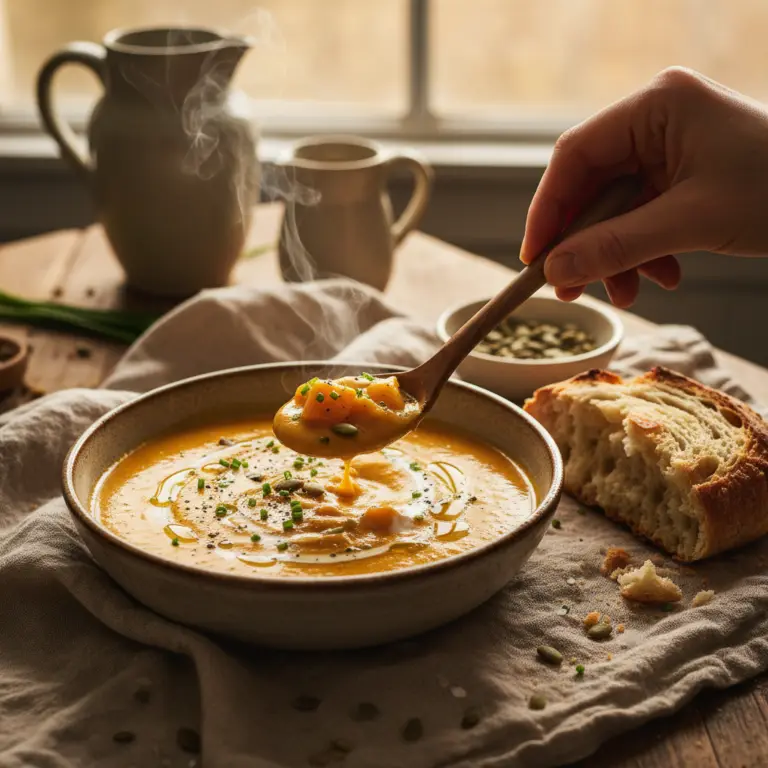
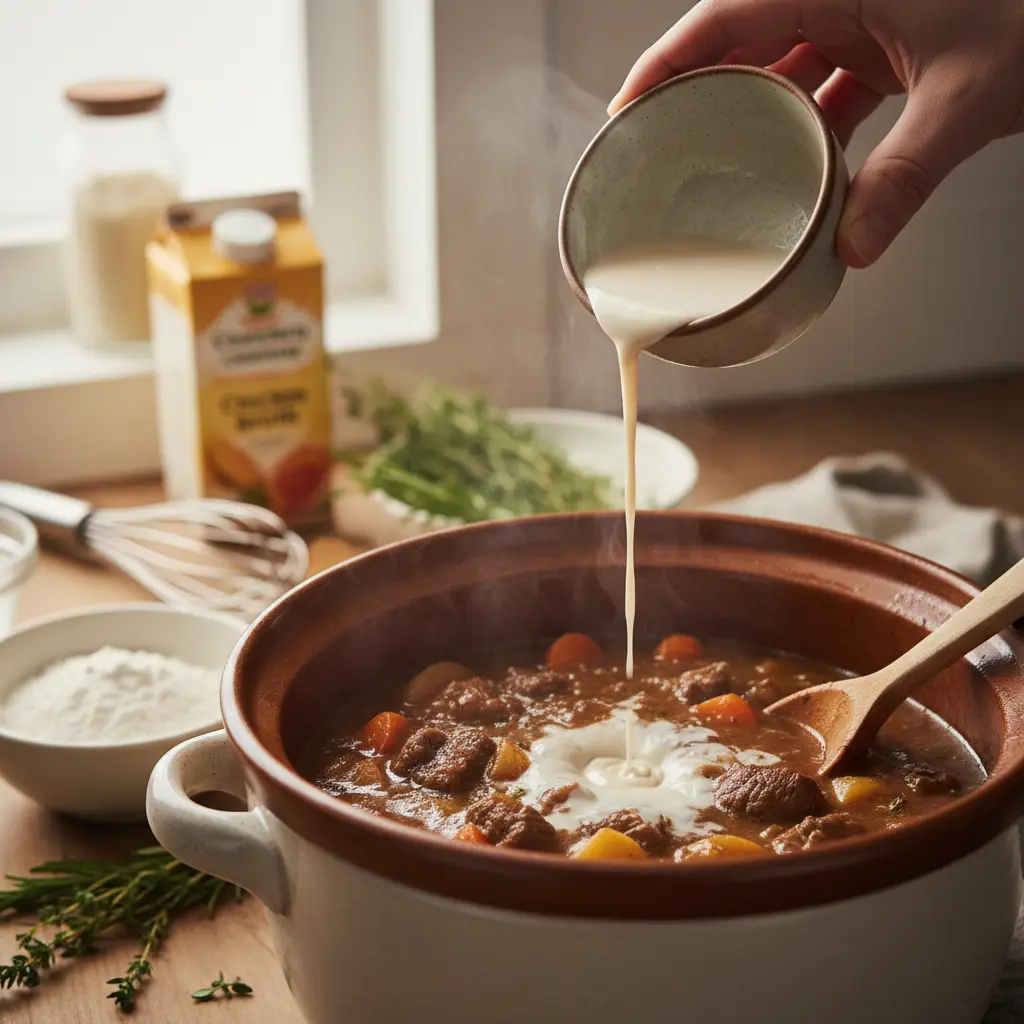
Adding 4 oz of full-fat cream cheese or heavy cream transforms thin broth into a velvety bisque.
This is my favorite method for keto chicken soups. It adds fat and satiety while thickening the texture significantly.
- Whisk in cream cheese during the last 20 minutes.
- Use room temperature dairy to prevent curdling.
- Stir continuously until the texture is smooth.
Pros and honest limits
- Keeps meals strictly low-carb
- Creates professional mouthfeel
- Uses ingredients already in pantry
- Xanthan gum can get gummy if overused
- Creamy additions change the flavor profile
- Requires active attention at the end
The Immersion Blender Trick
If your soup contains cauliflower or root vegetables, you have a built-in thickener. Use a handheld blender right in the pot.
Pulse just enough to break down a few chunks. You still want some texture left in the stew.
- Tilt the pot to ensure the blade is submerged.
- Pulse for 10 seconds to start, then check consistency.
- Avoid blending meat pieces to keep the texture rustic.
Practical comparison
| Method | Carb Impact | Time Needed |
|---|---|---|
| Xanthan Gum | Zero | 2 min |
| Cream Cheese | Low | 10 min |
| Pureeing Veggies | Minimal | 5 min |
| Reduction | None | 30 min |
Frequently asked questions
Can I use arrowroot powder?
Yes, but it is not low-carb. Use it only if you are not strictly tracking carbs.
Will heavy cream break?
It can if boiled too hard. Stir it in at the very end on the low setting.
How much xanthan gum is too much?
More than 1 tsp for a standard 6-quart slow cooker will make your soup slimy. Start small.
Does blending make it too smooth?
Only if you blend the whole pot. Just pulse for 10 seconds to keep some chunks.
Conclusion
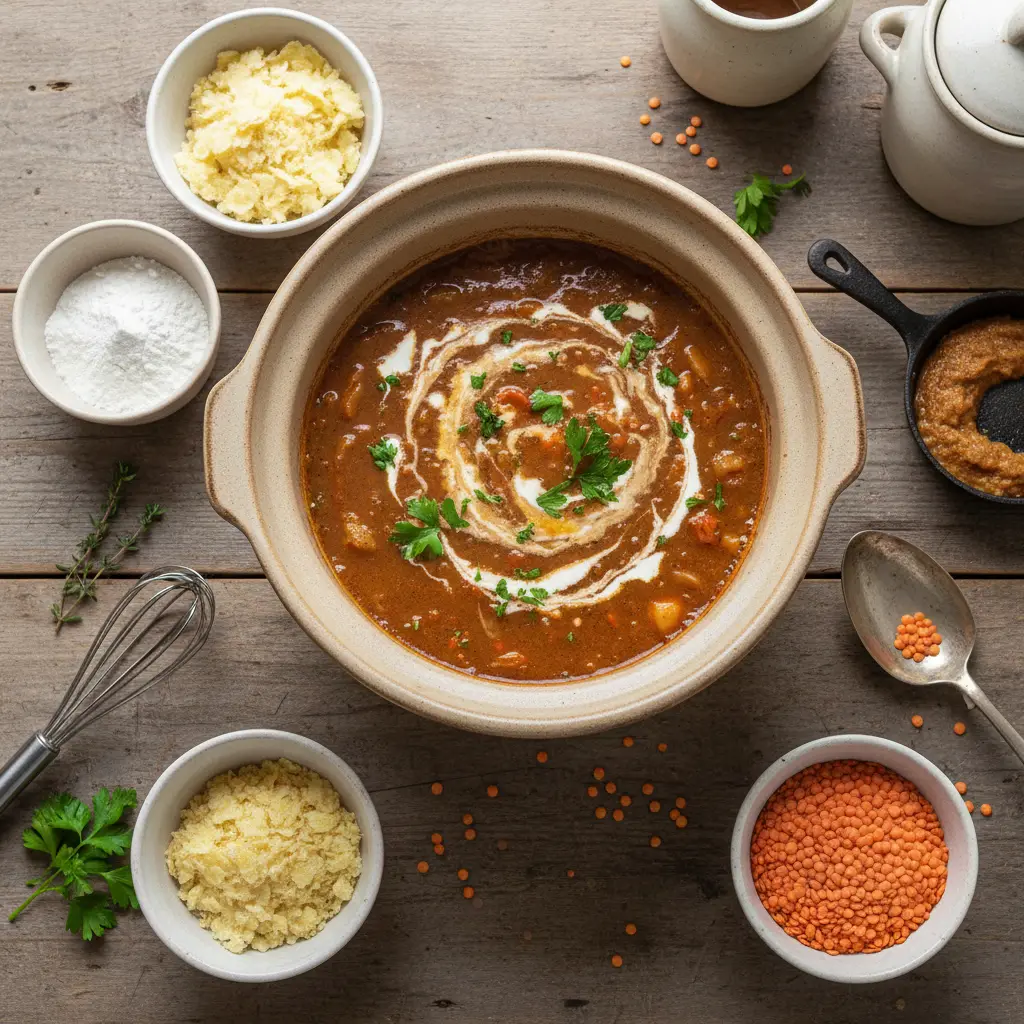
Mastering the texture of your slow cooker meals makes eating low-carb so much more enjoyable. Try the immersion blender trick tonight and see the difference it makes. If you found these tips helpful, subscribe to the newsletter for more keto-friendly kitchen hacks delivered weekly.
RSS
Related reading
Read next
How to tell it is done (without opening and poking every minute)
- Done meat shreds under a fork with no force — colour tells you nothing here.
- If the sauce is thin at the end, take the lid off for the last 30 minutes on high: it reduces without drying.
- Every lid lift costs roughly 20 minutes of cooking. Lift it twice, maximum.
- 4 h on high ≠ 8 h on low for a lean cut: low keeps it juicy, high dries it out.
- Hard vegetables always go at the bottom — that is the hottest part of the crock.
The 5 mistakes that ruin this recipe — and the fix for each
- Skipping the sear. Five minutes in a hot pan gives the colour and flavour a slow cooker cannot build on its own.
- Too much liquid. Nothing evaporates in a slow cooker. Use about half the liquid of a stovetop recipe.
- Dairy at the start. Cream and milk split over long cooking. Add them in the last 20 minutes.
- Fresh herbs too early. They vanish over 6 hours. Dried at the start, fresh at the end.
- Cooking pasta in the pot. Pasta and rice turn to mush. Cook separately and combine at serving time.
Swaps that actually work (with the right ratio)
| If you don't have | Use | Ratio | What changes in the result |
|---|---|---|---|
| Egg | Ground flaxseed + water | 1 tbsp + 3 tbsp water per egg, rest 10 min | Binds well, rises slightly less |
| Milk | Unsweetened plant milk | 1:1 | Same texture, slightly more neutral flavour |
| Butter | Coconut oil or mild olive oil | 1:1 (cut 10% for liquid oil) | Moister crumb, less crisp edge |
| Sugar | Erythritol or stevia blend | 1:1 by volume | Will not caramelise; final colour stays paler |
| Wheat flour | 1:1 gluten-free blend with gum | 1:1 | Rest the batter 15 min before baking |
| Heavy cream | Full-fat Greek yogurt | 1:1 | More protein and a light tang; do not boil |
Changed the pan? Adjust the time like this
| Original pan | Equivalent | Time adjustment | Watch out for |
|---|---|---|---|
| 8" round | 8×8" square | Same time | Square corners bake faster |
| 9" round | 9×13" pan | −5 to −8 min | Thinner batter, check early |
| Loaf pan | 6 jumbo muffin cups | −15 to −20 min | Cupcakes bake far faster |
| Deep casserole | Two shallow dishes | −10 min | Spreads the heat and prevents a raw centre |
Store, freeze and reheat without wrecking the texture
| Where | How long | How to store | How to bring it back |
|---|---|---|---|
| Fridge | 4 days | Store with the sauce over the meat | Low heat with a splash of water |
| Freezer | 3 months | Portion into flat bags | Thaw overnight in the fridge |
| Meal prep | 3 days | Keep sauce separate from the side | Reheat the sauce before combining |
Frequently asked questions
Can I make How to Thicken Slow Cooker Soup: 3 Proven Low-Carb Hacks ahead?
Yes. Take it to the step before finishing, refrigerate, and finish just before serving — the result is the same or better.
Can I double the recipe?
Yes. Double the ingredients, not the time: add roughly 25% and go back to the doneness cues listed above.
What is the real yield per serving?
Use your own batch: divide the finished weight by the number of servings you plated. Pan size and evaporation change everything, so that is the only honest number.
Does it work on any oven or stove?
Yes, but equipment varies by up to 35 °F. Judge by the doneness cues, not the clock, and note your own timing.
How well do leftovers keep?
Very well, following the storage table above. Freeze in flat portions: they thaw evenly and hold their texture.