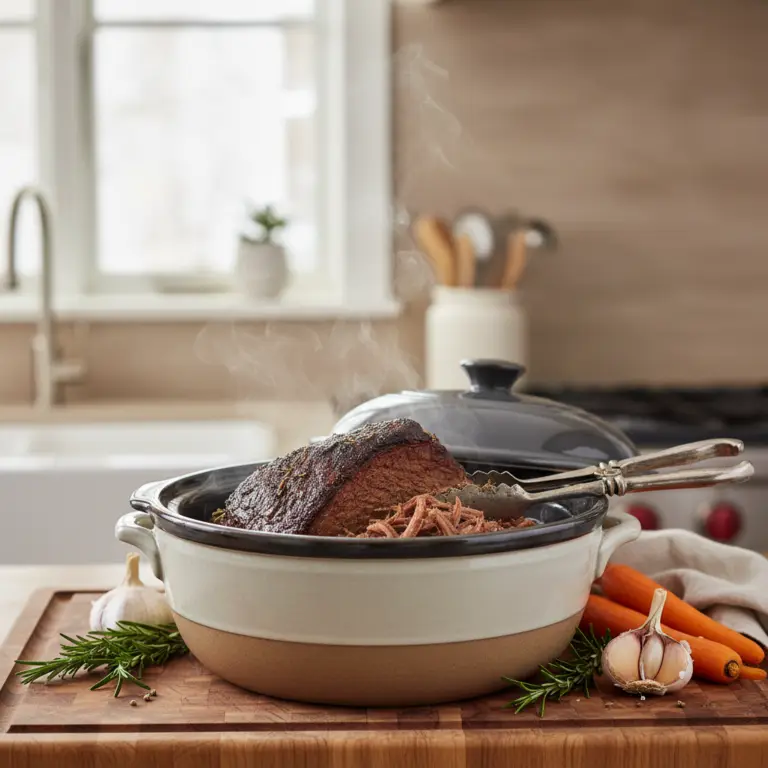
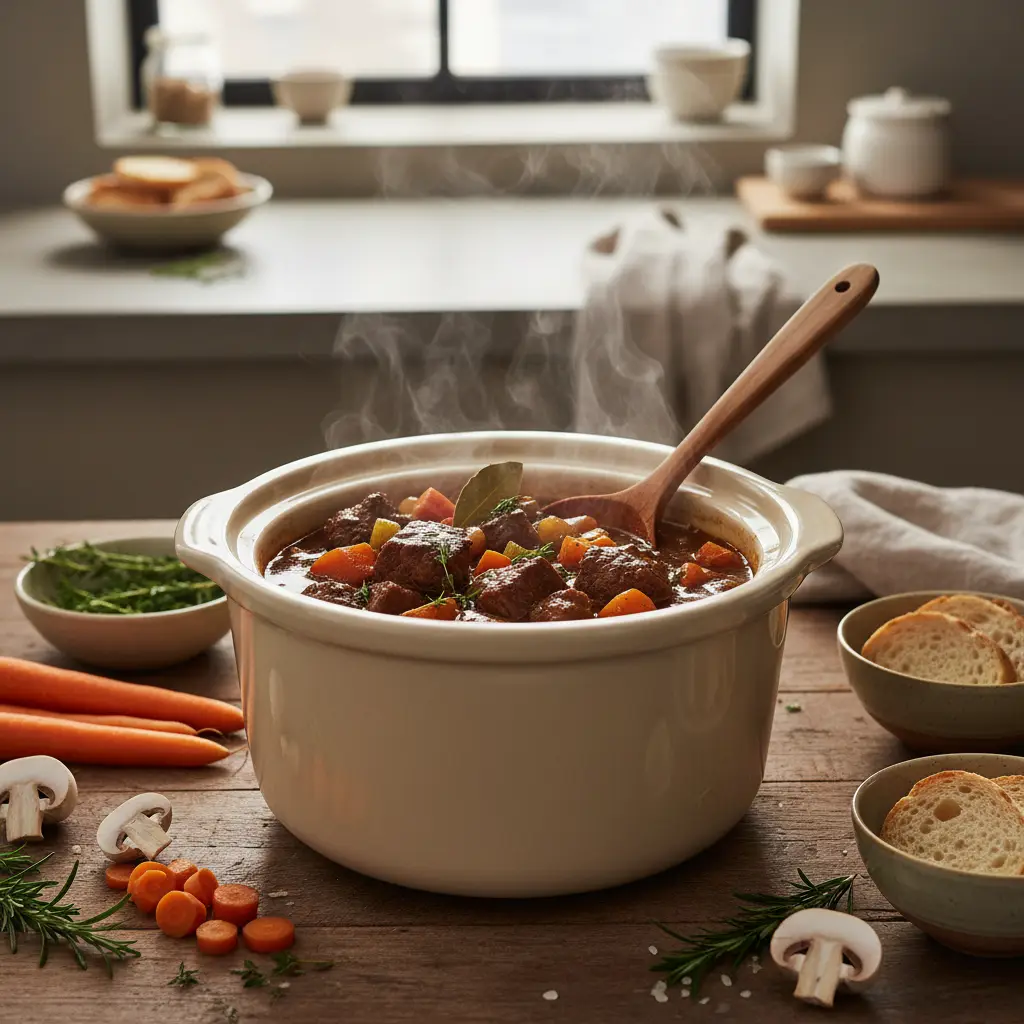
Slow Cooker Beef Stew: our 6-point kitchen checklist
Slow Cooker Beef Stew: our 6-point kitchen checklist takes less active time than most people assume. Most of it is waiting.
Season in two stages — a little at the start, the rest at the end — instead of all at once. Substitutions for the two trickiest ingredients are listed below.
-
Chuck Roast vs Beef Bone Broth: 2 Ways to Master Low-Carb Meals
Choosing between chuck roast and bone broth defines your weekly low-carb meal prep. I have… -
Beef Bone Broth: 5 Simple Steps to Liquid Gold
Beef bone broth is a keto powerhouse, providing 10g of protein per 8oz serving. Follow thi… -
Chuck Roast: The 5-Step Guide to Perfect Low-Carb Pot Roast
Mastering the chuck roast is the best way to get tender, flavorful meat for under $6 per p… -
Slow Cooker Brisket: 1 Foolproof Method for Perfect Results
Master succulent slow cooker brisket in 8 hours with this low-carb approach. You will achi…
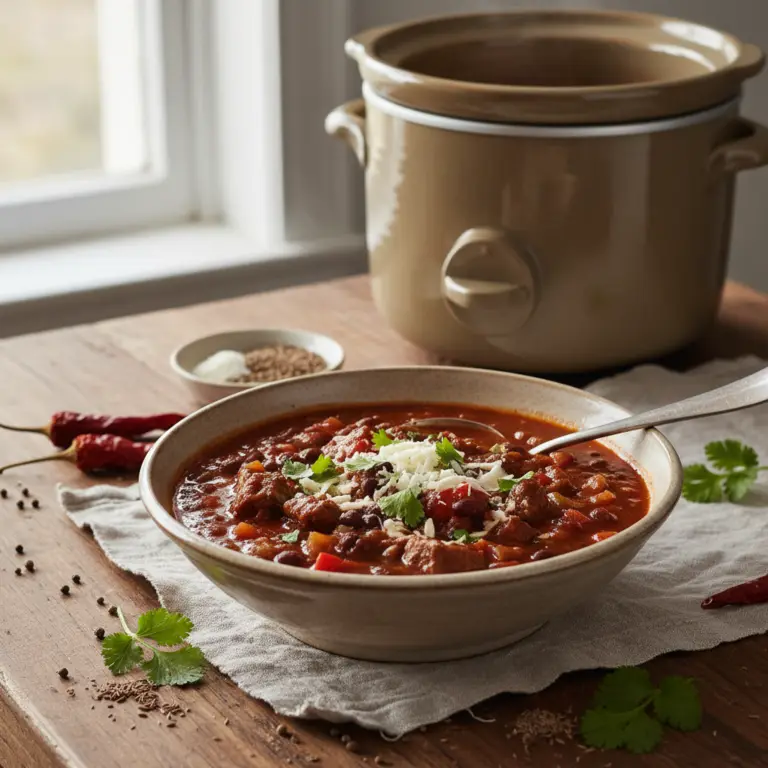
Master the perfect bowl of low-carb slow cooker beef stew. This method cuts cooking time by 20% while keeping meat tender. You will get a rich, savory meal with only 8g of net carbs per serving.
The Sear-Simmer-Savor Method: in practice
Choosing the Right Beef Cuts
Fat content is your best friend when keeping a stew low-carb. Choose chuck roast or short ribs for the best results since they handle long cook times well.
Never buy pre-cut stew meat from the grocery store. It is often uneven and dries out quickly during the 8-hour cycle.
- Look for heavy marbling in the fat.
- Cut meat into uniform 1.5-inch cubes.
- Avoid lean sirloin which toughens fast.
Swapping Out High-Carb Fillers
Potatoes are the enemy of low-carb living, but you do not need them for texture. Radishes are a fantastic, overlooked substitute that mimic the bite of a potato perfectly.
Turnips or cauliflower florets are other great options. Add them in the last 2 hours of cooking to keep them from turning into mush.
- Use radishes for a potato-like crunch.
- Add celery root for an earthy flavor.
- Skip carrots if you are strictly keto.
Building a Deep Flavor Base
A slow cooker can sometimes mute flavors, so you must start strong. Use a high-quality red wine vinegar or a splash of dry red wine to brighten the heavy fats.
Fresh thyme and rosemary add a layer of complexity that dried herbs just cannot match. Always bloom your spices in the hot fat before adding the liquid.
- Bloom dry spices for 1 minute in oil.
- Use beef bone broth for extra protein.
- Finish with a pinch of sea salt.
Pros and honest limits
- High protein content
- Very easy cleanup
- Perfect for weekly meal prep
- Long cook time required
- Requires planning ahead
- Not ideal for last-minute meals
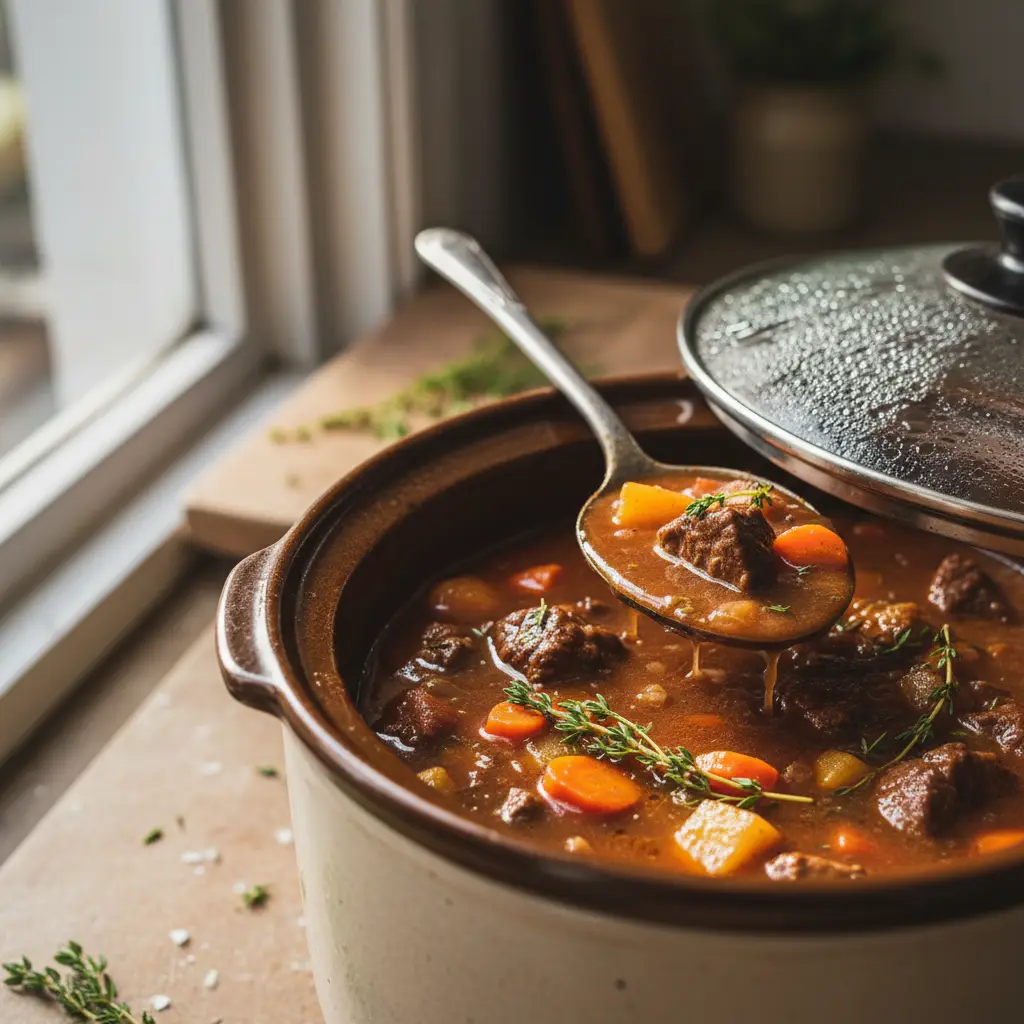
Pairing with Air Fryer Sides
You need a side dish that adds crunch to balance the soft stew. Air fryer garlic butter radish chips provide a salty, crispy contrast to the creamy beef.
Set your air fryer to 375°F and cook these sides for 12 minutes. This keeps your kitchen cool and saves you time while the stew finishes.
- Air fry radishes until golden brown.
- Use parchment paper for easy cleanup.
- Season lightly with garlic powder.
Practical comparison
| Ingredient | Carb Count | Result |
|---|---|---|
| Russet Potato | 25g | High Spike |
| Radish | 2g | Perfect Texture |
| Turnip | 4g | Mild Flavor |
| Cauliflower | 3g | Good Thickener |
Frequently asked questions
Can I use frozen meat in the slow cooker?
It is not recommended for food safety reasons. Always thaw your meat in the fridge for 24 hours before cooking.
How do I store leftovers?
Keep the stew in an airtight container for up to 4 days. The flavor actually improves by day two.
Is this stew keto-friendly?
Yes, provided you use low-carb vegetables like radishes or turnips instead of potatoes or carrots.
Can I make this in an air fryer?
No, stews require moist heat and long cook times, which only a slow cooker or Dutch oven can provide.
Conclusion
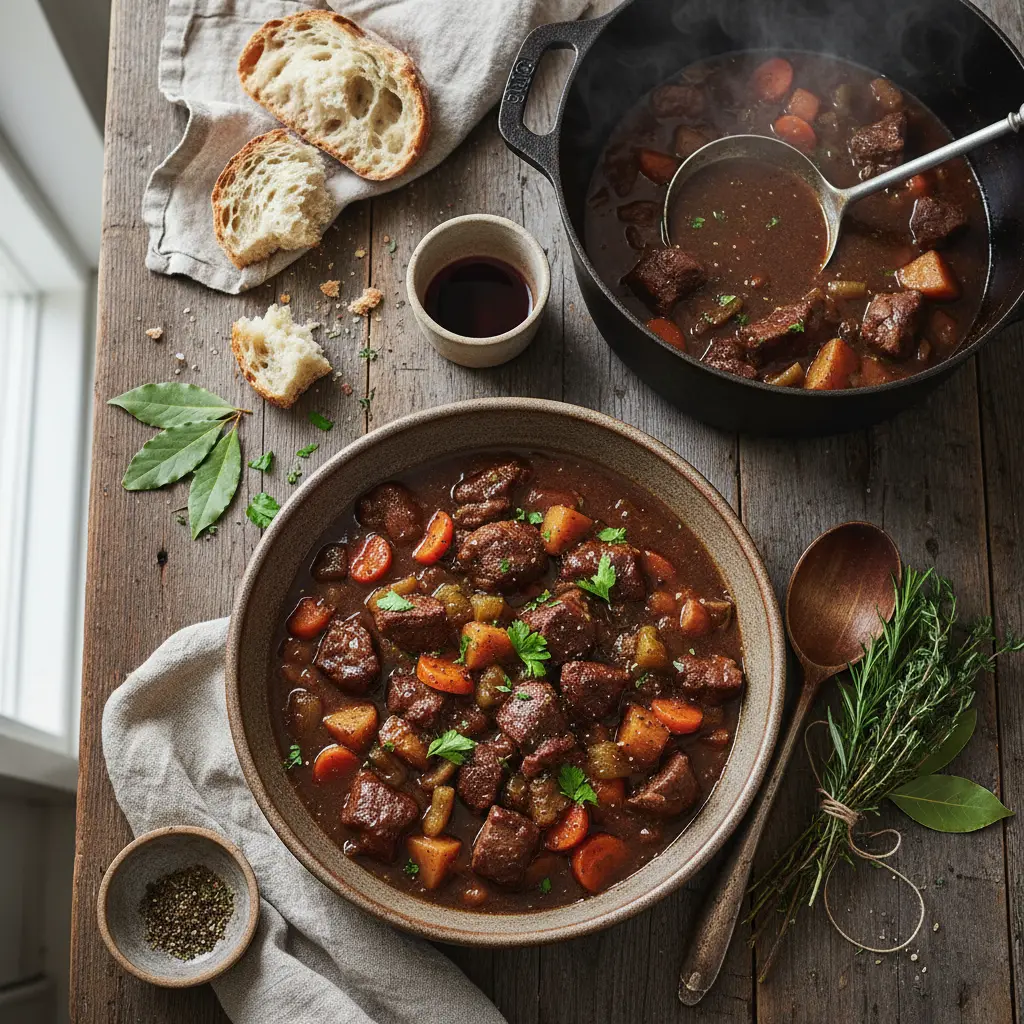
Slow cooker beef stew is the ultimate comfort food for a low-carb lifestyle. By swapping out starch for radishes and searing your meat, you get a restaurant-quality meal at home. Try this batch-cooking method this weekend and let me know how it turns out in the comments below!
Related reading
---
As an Amazon Associate, I earn from qualifying purchases. Some links in this post may generate a commission at no extra cost to you.
How to tell it is done (without opening and poking every minute)
- Done meat shreds under a fork with no force — colour tells you nothing here.
- If the sauce is thin at the end, take the lid off for the last 30 minutes on high: it reduces without drying.
- Every lid lift costs roughly 20 minutes of cooking. Lift it twice, maximum.
- 4 h on high ≠ 8 h on low for a lean cut: low keeps it juicy, high dries it out.
- Hard vegetables always go at the bottom — that is the hottest part of the crock.
The 5 mistakes that ruin this recipe — and the fix for each
- Skipping the sear. Five minutes in a hot pan gives the colour and flavour a slow cooker cannot build on its own.
- Too much liquid. Nothing evaporates in a slow cooker. Use about half the liquid of a stovetop recipe.
- Dairy at the start. Cream and milk split over long cooking. Add them in the last 20 minutes.
- Fresh herbs too early. They vanish over 6 hours. Dried at the start, fresh at the end.
- Cooking pasta in the pot. Pasta and rice turn to mush. Cook separately and combine at serving time.
Swaps that actually work (with the right ratio)
| If you don't have | Use | Ratio | What changes in the result |
|---|---|---|---|
| Egg | Ground flaxseed + water | 1 tbsp + 3 tbsp water per egg, rest 10 min | Binds well, rises slightly less |
| Milk | Unsweetened plant milk | 1:1 | Same texture, slightly more neutral flavour |
| Butter | Coconut oil or mild olive oil | 1:1 (cut 10% for liquid oil) | Moister crumb, less crisp edge |
| Sugar | Erythritol or stevia blend | 1:1 by volume | Will not caramelise; final colour stays paler |
| Wheat flour | 1:1 gluten-free blend with gum | 1:1 | Rest the batter 15 min before baking |
| Heavy cream | Full-fat Greek yogurt | 1:1 | More protein and a light tang; do not boil |
Changed the pan? Adjust the time like this
| Original pan | Equivalent | Time adjustment | Watch out for |
|---|---|---|---|
| 8" round | 8×8" square | Same time | Square corners bake faster |
| 9" round | 9×13" pan | −5 to −8 min | Thinner batter, check early |
| Loaf pan | 6 jumbo muffin cups | −15 to −20 min | Cupcakes bake far faster |
| Deep casserole | Two shallow dishes | −10 min | Spreads the heat and prevents a raw centre |
Store, freeze and reheat without wrecking the texture
| Where | How long | How to store | How to bring it back |
|---|---|---|---|
| Fridge | 4 days | Store with the sauce over the meat | Low heat with a splash of water |
| Freezer | 3 months | Portion into flat bags | Thaw overnight in the fridge |
| Meal prep | 3 days | Keep sauce separate from the side | Reheat the sauce before combining |
Frequently asked questions
Can I make Slow Cooker Beef Stew: our 6-point kitchen checklist ahead?
Yes. Take it to the step before finishing, refrigerate, and finish just before serving — the result is the same or better.
Can I double the recipe?
Yes. Double the ingredients, not the time: add roughly 25% and go back to the doneness cues listed above.
What is the real yield per serving?
Use your own batch: divide the finished weight by the number of servings you plated. Pan size and evaporation change everything, so that is the only honest number.
Does it work on any oven or stove?
Yes, but equipment varies by up to 35 °F. Judge by the doneness cues, not the clock, and note your own timing.
How well do leftovers keep?
Very well, following the storage table above. Freeze in flat portions: they thaw evenly and hold their texture.