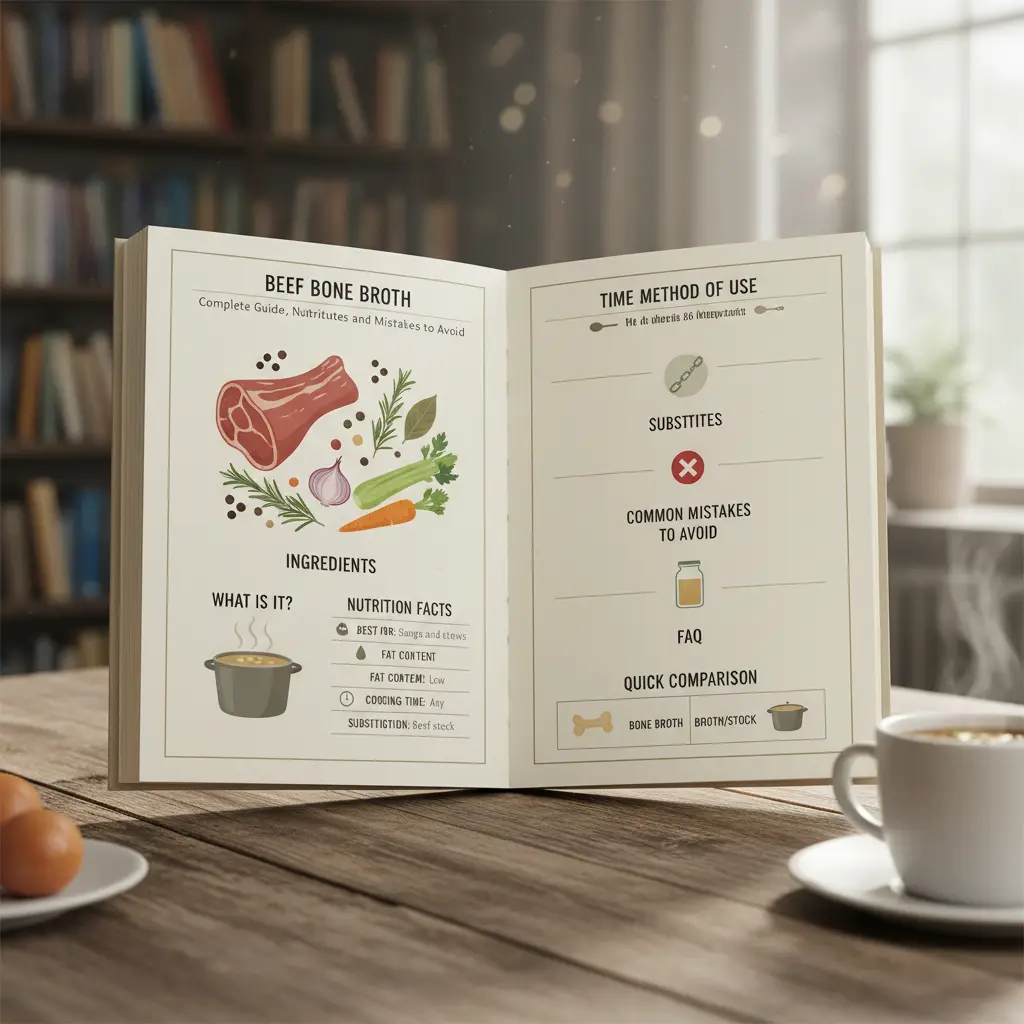
Beef Bone Broth: 5 Simple Steps to Liquid Gold
Short answer for Beef Bone Broth: 5 Simple Steps to Liquid Gold: how long it takes, what it should look like when it’s done, and what to do with the leftovers.
Preheat properly and give the pieces room — crowding steams food that should be browning. There’s a short troubleshooting list if something goes off.
-
Chuck Roast vs Beef Bone Broth: 2 Ways to Master Low-Carb Meals
Choosing between chuck roast and bone broth defines your weekly low-carb meal prep. I have… -
Chuck Roast: The 5-Step Guide to Perfect Low-Carb Pot Roast
Mastering the chuck roast is the best way to get tender, flavorful meat for under $6 per p… -
Slow Cooker Brisket: 1 Foolproof Method for Perfect Results
Master succulent slow cooker brisket in 8 hours with this low-carb approach. You will achi… -
Slow Cooker Beef Stew: 3 Secrets for Low-Carb Success
Master the perfect bowl of low-carb slow cooker beef stew. This method cuts cooking time b…
Beef bone broth is a keto powerhouse, providing 10g of protein per 8oz serving. Follow this guide to master a nutrient-dense base that replaces store-bought fillers for under $3 per batch.
The 3-Phase Extract: in practice
Understanding Beef Bone Broth
Beef bone broth is a long-simmered liquid made from roasted marrow bones, connective tissue, and water. Unlike standard stock, it is cooked for 12 to 24 hours to break down collagen into gelatin.
It is a staple in low-carb kitchens because it contains 0g net carbs per serving. It provides essential amino acids like glycine and proline which support joint health and gut lining.
- Rich in minerals like magnesium and calcium.
- Zero sugar or hidden fillers.
- Excellent for intermittent fasting windows.
Macros and Nutrition Facts
A typical 8oz serving contains roughly 40-50 calories. It is almost entirely protein, making it ideal for keto macros.
The fat content is naturally low if you skim the surface after refrigeration. It provides a clean energy source without spiking insulin levels.
- Protein: 10g per cup.
- Fat: 0.5g per cup.
- Net Carbs: 0g per cup.
Storage and Preservation
You can store fresh broth in the refrigerator for up to 5 days in a sealed glass jar. Always ensure the fat cap remains intact to protect the liquid underneath.
For long-term storage, freeze the broth in 1-cup silicone molds. This allows you to pop out exactly what you need for a quick soup or pan sauce.
- Glass jars prevent plastic leaching.
- Freeze for up to 6 months.
- Reheat on the stovetop until simmering.
Pros and honest limits
- Increases dietary collagen
- Inexpensive to make
- Highly versatile base
- Requires long prep time
- Requires freezer space
- Not a complete meal
Common Mistakes to Avoid
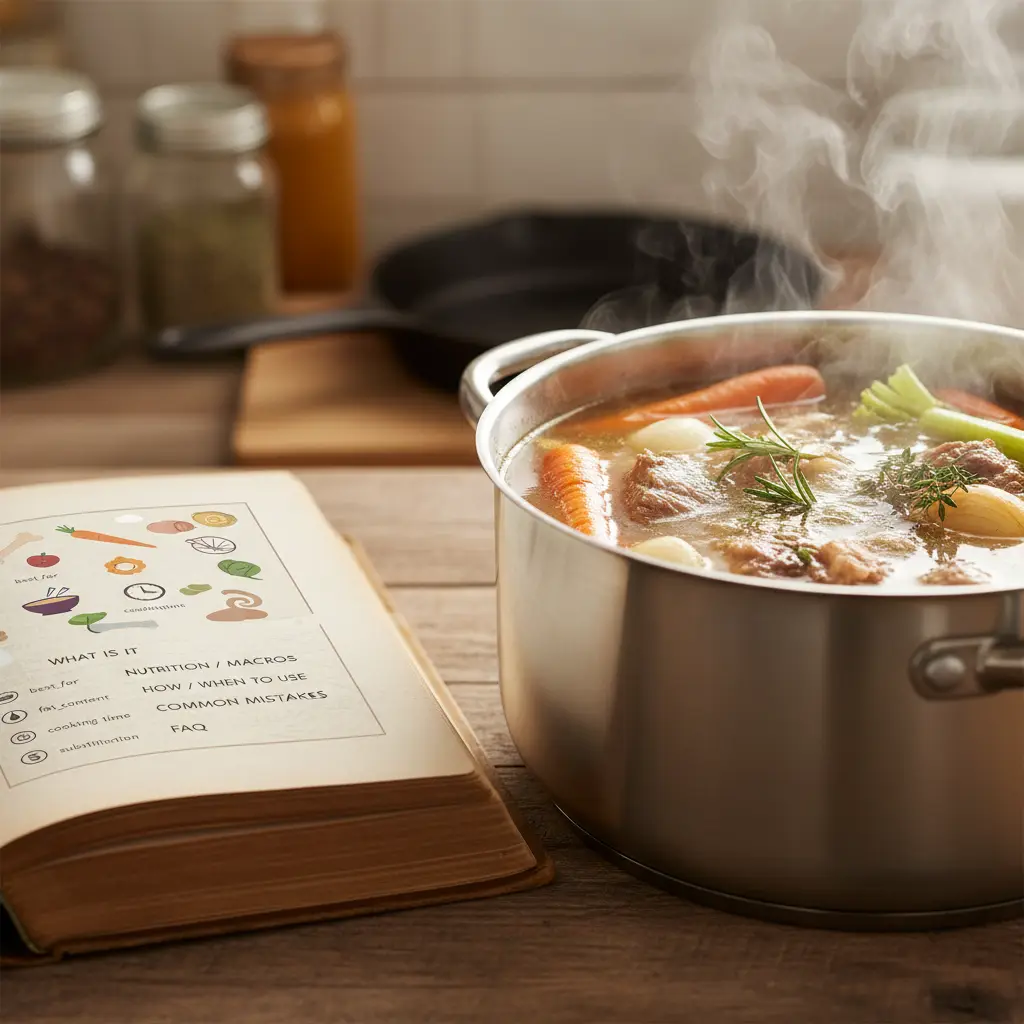
Many home cooks forget to roast the bones first, leading to a bland, pale broth. You need that Maillard reaction at 400°F to get a rich brown color.
Adding too much water dilutes the collagen concentration. Keep the water level just high enough to cover the bones by 2 inches.
- Do not boil hard; keep at a gentle simmer.
- Avoid adding salt until the very end.
- Never skip the apple cider vinegar step.
Practical comparison
| Liquid Type | Best Use | Cooking Time |
|---|---|---|
| Beef Bone Broth | Health/Sipping | 12-24 hours |
| Beef Stock | Soups/Stews | 3-4 hours |
| Beef Bouillon | Quick Seasoning | 2 minutes |
| Beef Consommé | Fine Dining | 6 hours |
Frequently asked questions
Can I use beef stock instead of bone broth?
Yes, but you will miss out on the high collagen content. Stock is made from meat and bones, while broth is strictly bone-focused.
How do I know if my broth is good?
If it turns into a jelly-like substance when refrigerated, you have successfully extracted the collagen. That is exactly what you want.
Is it safe to reuse bones?
No, once you have simmered them for 24 hours, the mineral and collagen content is depleted. Compost the bones after the final strain.
Can I make this in an air fryer?
You can use the air fryer to roast the bones at 400°F, but the actual simmering must be done in a stockpot or pressure cooker.
Conclusion
Beef bone broth is the ultimate low-carb pantry staple for better health. With just a few pounds of bones and a bit of patience, you can stop buying expensive, processed versions. Start your first batch today and notice the difference in your next bowl of soup.
📡 RSS
Related reading
How to tell it is done (without opening and poking every minute)
- Done meat shreds under a fork with no force — colour tells you nothing here.
- If the sauce is thin at the end, take the lid off for the last 30 minutes on high: it reduces without drying.
- Every lid lift costs roughly 20 minutes of cooking. Lift it twice, maximum.
- 4 h on high ≠ 8 h on low for a lean cut: low keeps it juicy, high dries it out.
- Hard vegetables always go at the bottom — that is the hottest part of the crock.
The 5 mistakes that ruin this recipe — and the fix for each
- Skipping the sear. Five minutes in a hot pan gives the colour and flavour a slow cooker cannot build on its own.
- Too much liquid. Nothing evaporates in a slow cooker. Use about half the liquid of a stovetop recipe.
- Dairy at the start. Cream and milk split over long cooking. Add them in the last 20 minutes.
- Fresh herbs too early. They vanish over 6 hours. Dried at the start, fresh at the end.
- Cooking pasta in the pot. Pasta and rice turn to mush. Cook separately and combine at serving time.
Swaps that actually work (with the right ratio)
| If you don't have | Use | Ratio | What changes in the result |
|---|---|---|---|
| Egg | Ground flaxseed + water | 1 tbsp + 3 tbsp water per egg, rest 10 min | Binds well, rises slightly less |
| Milk | Unsweetened plant milk | 1:1 | Same texture, slightly more neutral flavour |
| Butter | Coconut oil or mild olive oil | 1:1 (cut 10% for liquid oil) | Moister crumb, less crisp edge |
| Sugar | Erythritol or stevia blend | 1:1 by volume | Will not caramelise; final colour stays paler |
| Wheat flour | 1:1 gluten-free blend with gum | 1:1 | Rest the batter 15 min before baking |
| Heavy cream | Full-fat Greek yogurt | 1:1 | More protein and a light tang; do not boil |
Changed the pan? Adjust the time like this
| Original pan | Equivalent | Time adjustment | Watch out for |
|---|---|---|---|
| 8" round | 8×8" square | Same time | Square corners bake faster |
| 9" round | 9×13" pan | −5 to −8 min | Thinner batter, check early |
| Loaf pan | 6 jumbo muffin cups | −15 to −20 min | Cupcakes bake far faster |
| Deep casserole | Two shallow dishes | −10 min | Spreads the heat and prevents a raw centre |
Store, freeze and reheat without wrecking the texture
| Where | How long | How to store | How to bring it back |
|---|---|---|---|
| Fridge | 4 days | Store with the sauce over the meat | Low heat with a splash of water |
| Freezer | 3 months | Portion into flat bags | Thaw overnight in the fridge |
| Meal prep | 3 days | Keep sauce separate from the side | Reheat the sauce before combining |
Frequently asked questions
Can I make Beef Bone Broth: 5 Simple Steps to Liquid Gold ahead?
Yes. Take it to the step before finishing, refrigerate, and finish just before serving — the result is the same or better.
Can I double the recipe?
Yes. Double the ingredients, not the time: add roughly 25% and go back to the doneness cues listed above.
What is the real yield per serving?
Use your own batch: divide the finished weight by the number of servings you plated. Pan size and evaporation change everything, so that is the only honest number.
Does it work on any oven or stove?
Yes, but equipment varies by up to 35 °F. Judge by the doneness cues, not the clock, and note your own timing.
How well do leftovers keep?
Very well, following the storage table above. Freeze in flat portions: they thaw evenly and hold their texture.